Pressed in Secret: Inside Britain's Obsession With Rare Live Recordings on Wax
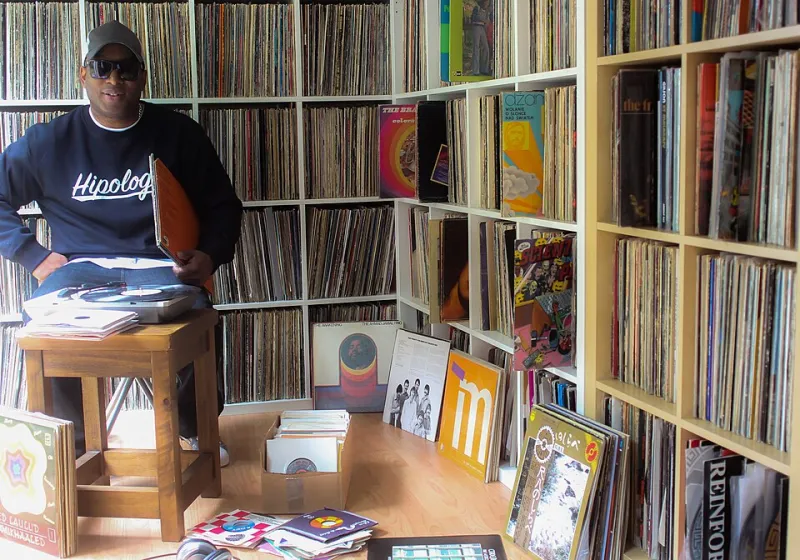
Photo: Jolo2010, CC0, via Wikimedia Commons
It's half seven on a Sunday morning at a car boot sale outside Wolverhampton, and Marcus Webb is already elbow-deep in a cardboard box. He's been here since the gates opened, armed with a head torch and a working knowledge of obscure pressing plant matrix codes that most people wouldn't recognise as useful information. This morning, he's looking for something specific: a bootleg pressing of a 1978 Buzzcocks show, reportedly circulating in the Midlands for the past decade, which he's been chasing for three years.
"I know it exists," he says, not looking up. "Someone pressed maybe two hundred copies. I've seen two of them. I just need to find a third."
Welcome to the world of live bootleg vinyl collecting — a corner of British music culture that's equal parts detective work, historical preservation, and flat-out compulsion.
What Even Is a Bootleg?
Before we go further, it's worth untangling what collectors actually mean when they talk about bootlegs, because the word covers a surprisingly wide spectrum. At one end, you've got officially sanctioned live recordings released in limited runs — think Record Store Day exclusives, numbered concert pressings, or the kind of thing that comes with a premium box set. These are legitimate, licensed, and increasingly sought after.
At the other end, you've got the genuine article: unauthorised recordings of live performances, pressed onto vinyl without the knowledge or consent of the artist or their label. These exist in a legal grey area at best, and a fairly clear-cut illegal one at worst. And yet they've been part of record collecting culture since at least the late 1960s, when someone pointed a microphone at Bob Dylan in the Royal Albert Hall and changed the game entirely.
In between these poles lies a whole ecosystem of semi-official releases, acetate test pressings, regional exclusives, and promotional-only records that never reached general sale. For British collectors, all of it is fair game.
The Hunt
Ask any serious collector what drives them and you'll hear variations on the same answer: it's not really about ownership. It's about the hunt, and what the hunt reveals.
"Every bootleg is a document," says Carla Osei, a Bristol-based collector who specialises in post-punk and early rave culture recordings. "It's proof that something happened, that a room full of people experienced something together. Official albums are polished and edited. A bootleg is raw. You can hear the crowd breathing."
Carla has been collecting for fifteen years and estimates she has around four hundred live recordings on vinyl, ranging from pressed bootlegs of Joy Division shows to limited official releases from artists like PJ Harvey and Radiohead. She keeps a spreadsheet — colour-coded, naturally — tracking what she owns, what she's looking for, and what she's been offered but passed on.
Discogs, the online marketplace and database, has transformed the landscape for collectors like her. What once required physical attendance at specialist fairs, connections with trusted dealers, or sheer geographical luck can now be approached systematically from a laptop. But that accessibility cuts both ways.
"Discogs is brilliant and it's ruined everything," she laughs. "Brilliant because you can find things you'd never have stumbled across otherwise. Ruined because so has everyone else. Prices have gone mental on anything with genuine rarity."
The Ethics of the Bootleg
This is where conversations among collectors tend to get more complicated, and more interesting. The ethics of bootleg collecting have always been contested, but the streaming era has added new dimensions to an old debate.
On one side: artists and labels who argue, reasonably, that unauthorised recordings represent lost revenue and a loss of control over their own artistic legacy. On the other: collectors who contend that bootlegs preserve performances that would otherwise be lost entirely, and that the commercial market for them is largely separate from the market for official releases.
"I've never bought a bootleg instead of buying an official record," says Jamie Forsyth, a Manchester-based dealer who runs a small stall at the Northern Quarter's weekend market. "They're different things. I buy the bootleg because the official version doesn't exist. If the label released it properly, I'd buy that instead."
Jamie's position is common among serious collectors, though not universal. Some artists — notably the Grateful Dead, and more recently acts like Bruce Springsteen — have leaned into the live recording culture, releasing official archive recordings in response to bootleg demand. In the UK, the model has been adopted by a handful of artists, though less systematically than in the US.
The question of what happens to recordings when labels fold, masters are lost, or artists die without clear instructions about their archives is one that collectors raise frequently. In these cases, they argue, the bootleg isn't just a curiosity — it's the only surviving record.
What's Driving the Current Boom?
Several factors are converging to make this a particularly active moment for the live bootleg market. The broader vinyl revival, now well into its second decade, has brought a new generation of collectors into the fold — people who are buying records for the first time and quickly developing the completionist tendencies that characterise the hobby's more committed practitioners.
The pandemic, oddly, also played a role. With live music shut down for the better part of two years, recordings of past performances took on a new emotional weight. People listened to bootlegs not just as collectors but as fans, craving the energy of a crowd they couldn't join.
And then there's the simple mathematics of scarcity. Genuinely rare live pressings aren't being made any faster, but the number of people interested in them is growing. Prices on Discogs for sought-after UK live pressings — a legitimate limited release from a Pulp Finsbury Park show here, a pressed audience recording from a legendary Peel Session there — have climbed steadily.
Back in the Car Boot
Marcus Webb doesn't find his Buzzcocks pressing this morning. He does, however, surface from a different box with a slightly battered copy of a 1982 Siouxsie and the Banshees live pressing that he didn't know existed until thirty seconds ago. He holds it up to the light to check the vinyl for scratches, examines the label with the focused attention of a jeweller appraising a diamond, and then, very calmly, tucks it under his arm.
"That'll do," he says.
It's not the one he came for. It might be better. That, in miniature, is what keeps collectors coming back — the sense that the record you weren't looking for might be the one that matters most. On wax, in the grooves of an unauthorised pressing from a show that happened forty years ago, something is still alive. And people like Marcus are determined to keep it that way.