Side One, Side Two: The Artists Redesigning Live Shows Around the Vinyl Experience
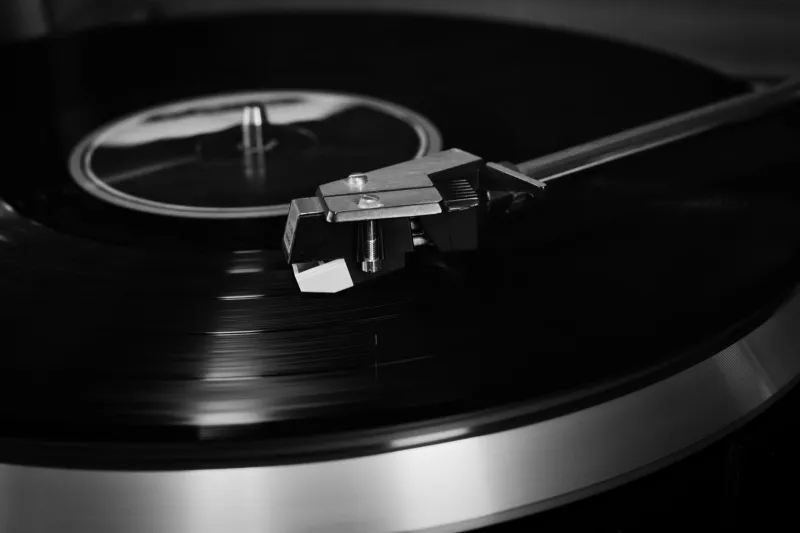
There's a moment that vinyl collectors know intimately. The needle reaches the run-out groove, the music stops, and you're left with a few seconds of silence before you cross the room, flip the record, and let side two begin. It's not dead air. It's punctuation. And increasingly, British artists are deciding that their live shows need exactly that kind of punctuation too.
In an era when streaming has conditioned listeners to expect infinite, uninterrupted queues of music — algorithm-assembled, shuffle-ready, never pausing for breath — a quiet counter-movement is taking shape on stages across the UK. Call it the side flip philosophy. Call it the needle drop effect. Whatever the name, the idea is the same: structure a live performance the way a great album was always meant to be experienced, with intention, architecture, and a deliberate break in the middle.
The Set as a Record
Manchester-based indie outfit The Hollow Coasts made headlines last autumn when they announced their UK tour would be split into two distinct halves, each running roughly twenty-two minutes — the average playing time of a vinyl side. Between them, a ten-minute intermission during which the band left the stage entirely, house lights came up slightly, and a DJ played a single 45 at the merch table.
"We'd been listening back to our album on wax and realised how much the gap between sides actually does," says guitarist and songwriter Cara Melling. "Side one ends on this quite tense, unresolved note. Then you flip it, and side two opens with something that feels like a release. We thought — why aren't we doing that live?"
The response from audiences was, by most accounts, startling. Social media posts from the tour described the intermission as "unexpectedly emotional" and "the best bit of the whole night." One reviewer for a regional music blog called it "the first time I've genuinely felt the shape of a live set rather than just the sum of its songs."
The Hollow Coasts aren't alone. Across the country, from Bristol art-rock acts to Edinburgh folk collectives, artists are increasingly talking about song ordering and set dynamics in the language of vinyl sides — discussing where to place the "opening track energy," when to schedule the "side one closer," and how to make the return from the interval feel like needle drop on side two.
Sound Designers Shaping the Silence
Behind the scenes, it's not just the musicians driving this shift. Sound designers and production teams are playing a significant role in translating the vinyl experience into live staging.
Leeds-based live sound engineer Priya Chandran has worked with several touring acts over the past two years who've asked her to think about "the texture of the gaps" as much as the music itself. "Artists are coming in and saying they want the silence to feel like something," she explains. "Not just an absence of sound, but a moment that has weight. That's very much a vinyl way of thinking."
Chandran describes one recent project where the production team used subtle ambient drones — barely audible, felt more than heard — to fill the space between the two halves of the set. "It was like the equivalent of that faint crackle you get in the groove before the music starts," she says. "Just enough to tell your brain that something is coming."
Stage lighting is being rethought along similar lines. Rather than the relentless build-and-drop of a conventional gig, some productions are now designed with a visual "intermission palette" — warmer, lower lighting that signals a shift in register without killing the atmosphere entirely.
Why Now?
It would be easy to dismiss this as nostalgia dressed up as innovation, but the artists involved are largely resistant to that framing. For many of them, the vinyl structure is less about romanticising the past and more about reclaiming something specific that streaming has quietly eroded: the sense that a body of music has a shape.
"When you put an album on Spotify, you lose control of how it's experienced almost immediately," says Birmingham singer-songwriter Declan Fosse, whose recent tour was explicitly billed as a "two-side performance." "People skip, shuffle, play one track on repeat. Which is fine — music belongs to the listener. But live, you get to say: this is the sequence. This is the journey. The interval is part of that."
Fosse points to the way audiences have responded to the format as evidence that something real is being tapped into. "People come up afterwards and talk about the show like it was a story. They say things like 'when you came back for the second half it felt like a new chapter.' That's the vinyl logic working on them, even if they've never owned a record in their lives."
There's a generational dimension here too. Younger gig-goers — many of whom have spent their entire listening lives inside streaming platforms — are reportedly responding with particular enthusiasm to the structured approach. For them, the interval and the deliberate pacing aren't old-fashioned constraints. They're novel experiences.
The Setlist as Side One, Side Two
Practically speaking, how do artists go about building a set around this philosophy? The process, it turns out, is more granular than simply cutting the show in half.
Cara Melling describes spending weeks mapping out the emotional arc of The Hollow Coasts' set before the tour. "You think about what a side one closer does — it's the track that leaves people sitting with something unresolved, something that makes them want to flip the record. In a live context, that's the song you play just before you walk offstage for the interval. It can't be a banger. It has to be a question."
The opening of side two requires equal care. "Your side two opener has to justify the wait," she says. "It has to feel like an answer, or at least a shift in perspective. We ended up choosing a song we'd never played live before specifically for that slot, because we wanted it to feel genuinely new."
Producer and multi-instrumentalist Jonah Stirk, who has collaborated with several acts currently exploring this format, talks about the importance of tempo mapping across both halves. "On a great double-sided album, there's a kind of breathing pattern — the energy rises, peaks, drops back, and then the flip resets everything. You can absolutely replicate that live. You just have to be disciplined enough not to front-load all your best stuff."
Audiences Are Learning the Language
Perhaps the most interesting development is the way regular gig-goers are beginning to anticipate and appreciate the format on its own terms. Venue staff at several mid-capacity spaces around the UK report that audiences now treat the interval at these shows differently to a standard support-act break — more reflective, less immediately phone-in-hand.
"There's a different quality to the crowd during those intermissions," says Priya Chandran. "They're not just waiting. They're processing. You can feel it."
Whether this represents a lasting shift in how British live music is made and experienced, or a compelling but short-lived experiment, remains to be seen. But there's something quietly radical about the idea that a format invented to manage the physical limitations of a twelve-inch disc might turn out to be exactly the structural tool that live performance was missing.
The needle drops. The room holds its breath. Side two begins.
Some things are worth the wait.