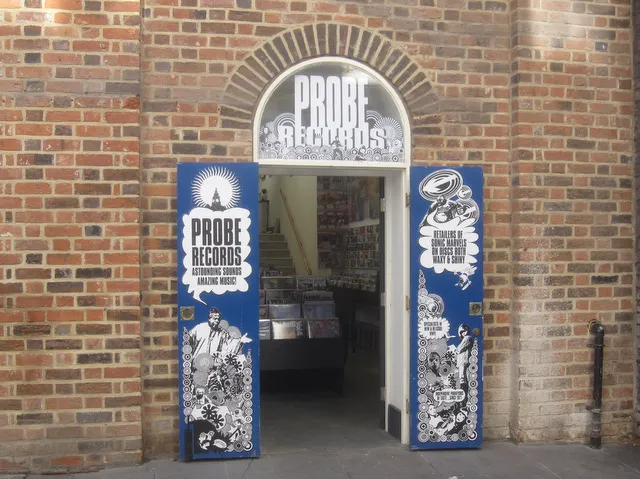
Spin Doctors: The Sound Engineers Keeping Vinyl Alive in Britain's Live Venues
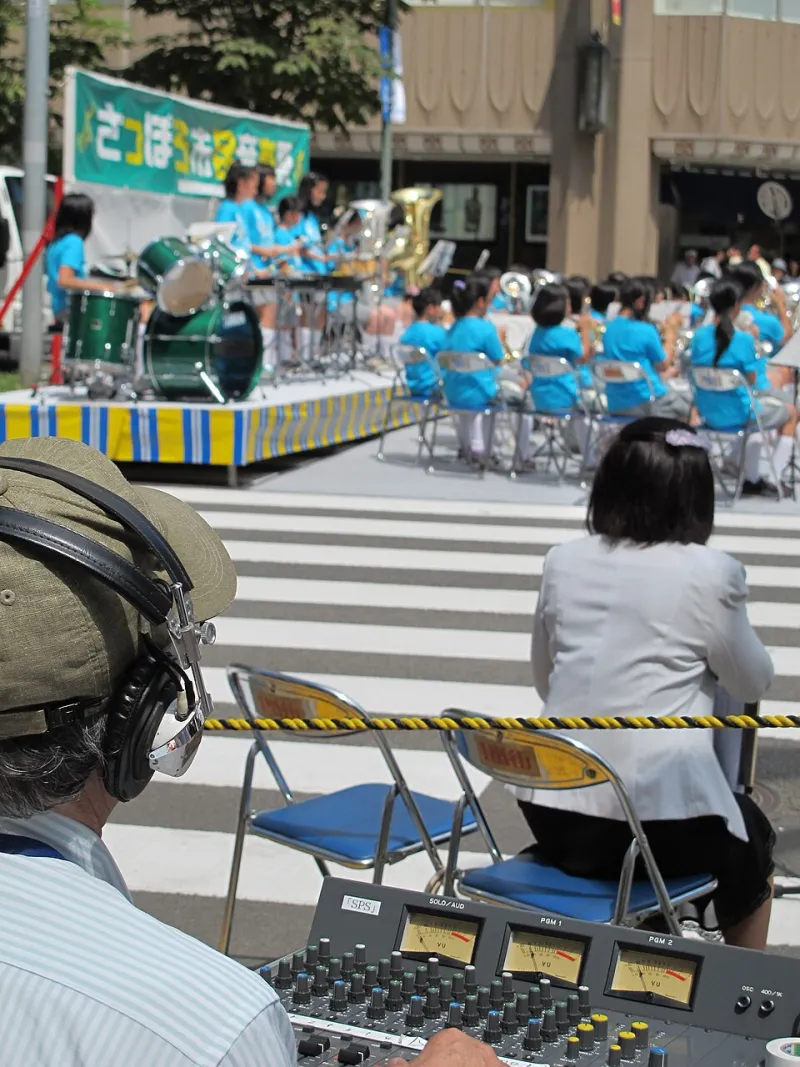
Photo: Sgroey, CC BY-SA 4.0, via Wikimedia Commons
The moment a needle finds its groove in a heaving venue, something almost magical happens. The crowd feels it — that warmth, that slight crackle, that unmistakable sense that music is being played rather than merely transmitted. But behind that magic, usually hidden in the shadows of a mixing desk or tucked away in a monitor booth, is a sound engineer who's spent weeks — sometimes months — making sure the whole thing doesn't spectacularly fall apart.
Vinyl playback in live settings is having a genuine moment in the UK. From intimate club nights in Manchester's Northern Quarter to headline festival stages at Glastonbury's peripheral arenas, turntables are increasingly appearing as legitimate performance instruments, DJ centrepieces, and atmospheric tools. The demand is real. The complications, however, are equally real.
The Problem Nobody Talks About
Ask any seasoned live sound engineer about their relationship with vinyl and you'll get a wry smile before the horror stories begin.
"The first time I was asked to integrate a pair of Technics 1210s into a full live band setup, I thought it'd be straightforward," says Danny Howell, a freelance FOH engineer who's worked venues from the Barbican to Brudenell Social Club in Leeds. "Within ten minutes of soundcheck, we had bass frequencies from the kick drum physically shaking the needle out of the groove. The DJ was looking at me like I'd personally offended him."
It's a problem that sits at the intersection of physics and acoustics. Turntables are, by their very nature, extraordinarily sensitive instruments. A stylus tracking a groove is responding to microscopic vibrations — which means any external vibration, including the very sound being produced by the PA system, can interfere. In a live music environment, where bass frequencies can push 100 decibels and subwoofers are physically moving the air in a room, keeping a needle stable is genuinely difficult.
"Floor-borne vibration is your biggest enemy," explains Sarah Okafor, house engineer at a mid-sized venue in Birmingham's Digbeth district. "Sound travels through the stage, through the risers, up into your decks. You can feel it through your feet. The needle absolutely feels it too."
The Kit That's Changing the Game
Solutions have evolved considerably in recent years, drawing on a combination of old-school isolation techniques and newer engineering innovations.
Rubber isolation feet — long used in home hi-fi setups — have found their way onto venue stages, but engineers quickly discovered that domestic solutions rarely hold up in professional settings. Specialist isolation platforms, including products from UK-based manufacturers and European imports, have become standard kit for technicians who work regularly with vinyl. Some engineers swear by custom-built floating platforms that decouple the turntable from the stage surface entirely.
"I built my own isolation rig using squash balls and a layered MDF platform," admits Howell with a grin. "It looks absolutely ridiculous but it works a treat. I've had it survive a full brass band on stage six feet away."
Beyond physical isolation, the choice of cartridge and stylus plays a significant role. Heavier tracking force cartridges — those that apply more downward pressure on the groove — are less susceptible to skipping under vibration, though they come with trade-offs in terms of record wear and tonal character. Many engineers have developed preferred setups through trial, error, and not a small amount of ruined pressings.
Okafor favours a combination of isolation platforms with a cartridge she describes as "aggressive enough to hold on for dear life" when the room gets loud. "It's not what an audiophile would choose," she concedes, "but audiophiles aren't mixing a four-piece band at the same time."
Acoustic Considerations and Room Intelligence
The challenges don't end with keeping the needle in the groove. Once audio is successfully captured from the stylus, it enters an acoustic environment that's fundamentally different from a living room or recording studio.
Vinyl has a characteristic frequency response — a warmth in the midrange, a slight roll-off in the extreme high frequencies — that engineers must account for when blending it into a live mix. What sounds beautiful through a home hi-fi system can become muddy and indistinct when routed through a large-format PA.
"You have to treat it like any other instrument in the mix," says Okafor. "EQ it, give it space, think about where it sits in the frequency spectrum relative to everything else happening on stage. People sometimes assume vinyl will just sound good automatically. It doesn't — you have to work for it."
Room acoustics add another layer of complexity. Older UK venues — Victorian-era theatres, converted warehouses, low-ceilinged club spaces — each present unique challenges that affect how vinyl playback translates to an audience. Hard surfaces create reflections that can muddy the warm character that makes vinyl appealing in the first place.
The Human Element
Perhaps the most underappreciated aspect of vinyl integration in live settings is the relationship between the sound engineer and the performer. DJs and artists who use turntables as performance instruments have specific, often deeply personal relationships with their equipment and their records. Walking into a venue and having a technician you've never met start adjusting your setup requires a degree of trust that takes time to build.
"You have to understand what they're trying to achieve," Howell says. "Some artists want that raw, slightly unpredictable quality that vinyl can have live. Others want it to sound as clean and controlled as possible. Your job is to serve their vision, not impose your own."
That collaborative spirit seems to be defining how the craft is developing. Engineers who work regularly with vinyl have developed something of a community in the UK, sharing techniques, comparing notes, and occasionally pooling resources for unusual gigs. Online forums and informal networks have become knowledge hubs where hard-won experience circulates freely.
Why It Matters
For all the technical headaches, the engineers we spoke to are unanimous about one thing: the effort is worth it.
"There's a moment in a show where the vinyl is running and the room is with it," Okafor says, her voice shifting slightly. "And you can feel that the audience knows something different is happening. They're not just listening to music — they're watching it being played, on a physical object, in real time. That connection is something digital playback genuinely can't replicate."
As vinyl continues its unlikely resurgence across the UK — with record sales climbing for the sixteenth consecutive year — the demand for engineers who understand how to handle it in live contexts is only growing. The invisible craft is becoming, gradually, a recognised specialism.
Danny Howell is already booked solid through next spring. His squash ball isolation rig is coming with him to every single gig.