Crate Digging Under Canvas: How UK Festivals Became the New Record Fair
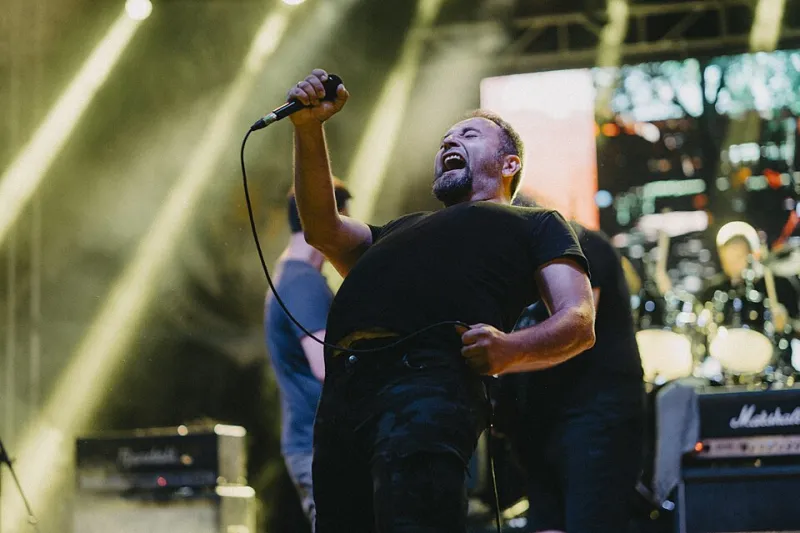
Photo: Shixart1985, CC BY 2.0, via Wikimedia Commons
It's half past three on a Saturday afternoon at Green Man Festival in the Brecon Beacons. The main stage headliner doesn't start for another four hours. Somewhere in the distance, a brass band is doing something unexpected with a Fleetwood Mac cover. And in a canvas-roofed structure near the festival's edge, a queue of about thirty people is waiting patiently to flip through a crate of 12-inches pressed by a small Welsh label that most of them had never heard of before today.
This is the new record fair. And it smells faintly of woodsmoke.
From Stalls to Stations
The presence of vinyl at UK music festivals isn't entirely new — a lone trader flogging second-hand 7-inches has been a festival fixture for years. But what's changed, particularly over the last three or four summers, is the scale, the intentionality, and the involvement of actual independent record labels setting up proper pop-up experiences.
Festivals like Green Man, End of the Road in Dorset, and Latitude in Suffolk have all seen a meaningful increase in dedicated vinyl spaces — not just stalls, but listening stations, label showcases, and curated collections designed around the festival's own musical identity. At End of the Road last year, no fewer than six independent labels had some form of physical presence, ranging from a simple crate of records to a full listening booth where festivalgoers could sit down with headphones and hear an album before deciding whether to buy it.
For the labels involved, the appeal is fairly obvious. "You've got a captive audience of people who are already emotionally invested in music," says Priya Anand, who runs Bristol-based Pale Light Records. "They've travelled to be here. They're in discovery mode. Their defences are down in the best possible way. If you can get a record into someone's hands at a festival, the chance of them actually listening to it — really listening — is so much higher than if they just see it on a website."
The Psychology of the Festival Purchase
There's a specific kind of buying behaviour that happens at live events, and it's worth understanding. Festivalgoers are, by definition, people who have already decided to spend money on experiences rather than objects. They're not in a transactional mindset — they're in an exploratory one. And that turns out to be a surprisingly fertile state for vinyl purchases.
Several traders and label representatives point to a consistent pattern: someone sees a band play a short set on a smaller stage, loves what they hear, and immediately heads to the nearest record stall to find something physical to take home. The live performance becomes a direct gateway to the physical purchase. It's a loop that streaming simply can't replicate — you can't walk out of a Spotify playlist and into a shop.
"We sold out of our last two releases at Green Man," says Anand. "Both of them had artists playing the festival that weekend. People heard the set and came straight to us. We had to turn people away. That's never happened at a record fair."
The emotional dimension of the festival purchase matters too. A record bought at a festival carries a story. It's tied to a specific memory — the weather, the crowd, the moment a song hit differently because you were standing in a field hearing it live for the first time. That's not sentimentality; that's the physical object functioning exactly as its most passionate advocates always said it should.
Smaller Festivals, Bigger Crate Culture
While the larger, more established festivals have begun to formalise their vinyl offerings, some of the most interesting activity is happening at smaller regional events. Festivals with capacities of a few thousand rather than tens of thousands are proving to be particularly effective environments for independent label pop-ups, partly because the audience-to-trader ratio is more manageable, and partly because smaller festivals tend to attract a more genre-committed crowd.
The Deer Shed Festival in North Yorkshire, for instance, has cultivated a dedicated vinyl corner that's grown year on year. Visions Festival in London — more of an indoor urban event, but very much festival in spirit — has made independent label showcasing central to its identity. Even some of the newer folk and roots festivals popping up across Scotland and Wales are incorporating vinyl trading as a deliberate programming choice rather than an afterthought.
"The smaller the festival, the more the vinyl stall becomes a social hub," observes James Whitfield, a Bristol-based collector who has attended more than forty UK festivals over the past decade. "People gather there between sets. You get these brilliant conversations — someone picks up a record, someone else recognises the label, and suddenly you're deep into a discussion about the producer's back catalogue. That doesn't happen at a supermarket."
Labels as Curators, Festivals as Galleries
Perhaps the most significant shift is conceptual. The best independent labels aren't simply setting up a stall and hoping for sales — they're thinking about their festival presence as a kind of curated experience, one that reflects and reinforces their artistic identity.
Pale Light Records, for instance, brings only a tightly edited selection of records to each festival — no more than twenty titles — and deliberately chooses releases that connect to the festival's own programming. "If an artist on our roster is playing the festival, we'll bring their record and the records that influenced them. We're building a little narrative," says Anand. "It's not a dump of stock. It's an argument about music."
That curatorial approach mirrors what the best independent record shops have always done — and it's no coincidence that several of the most active festival pop-ups are operated by shops rather than labels. Rough Trade, Sister Ray, and a handful of regional independents have all dipped into the festival circuit in recent years, each bringing their own editorial sensibility to the crate.
Taking Something Home
Ultimately, what's driving the vinyl pop-up boom at UK festivals is something quite simple: people want a physical souvenir of a transformative experience. A festival wristband fades. A photograph captures a moment but not a feeling. A record, played at home weeks later, can genuinely transport you back to a field in the Brecon Beacons, to a brass band doing something unexpected, to the moment a song you'd never heard before made complete and total sense.
For the labels setting up under canvas, for the traders hauling crates across festival sites, and for the festivalgoers queuing to flip through them, that's reason enough.