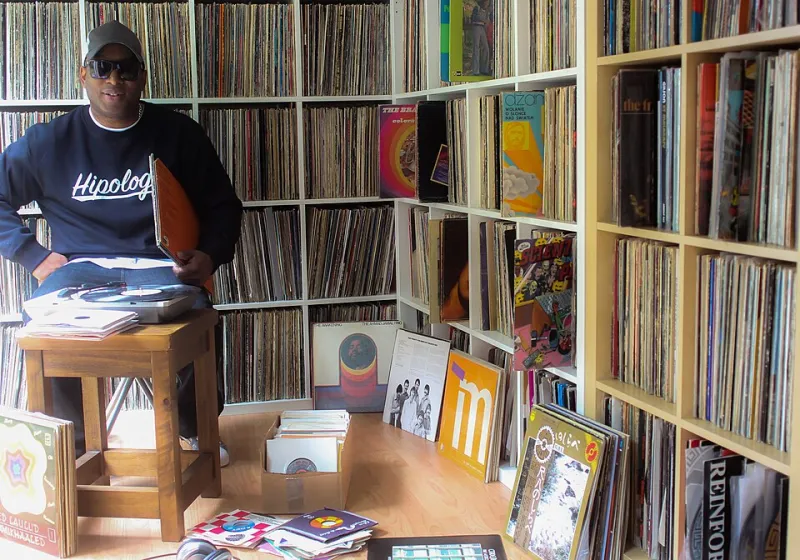
Flip Side Thinking: The Artists Composing Albums With the Turntable in Mind
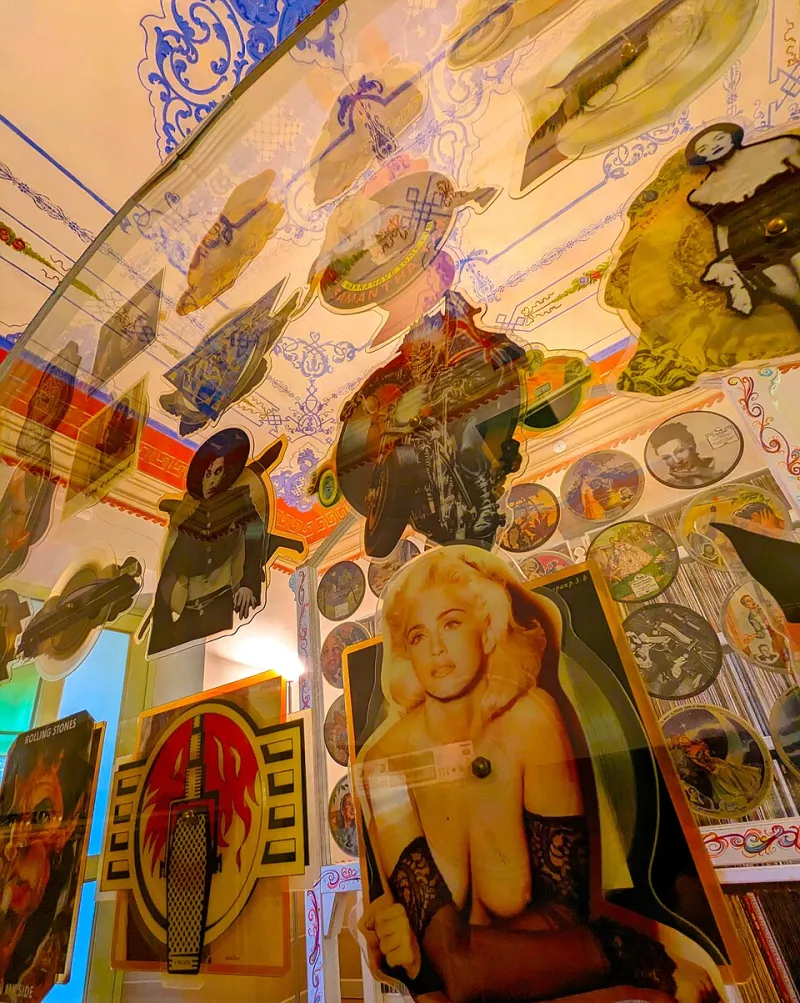
Photo: Museo del disco d'epoca, CC0, via Wikimedia Commons
There's a moment on the second side of Yard Act's debut album where the music seems to exhale. It's not accidental. It's designed. In an age where most people consume music through earbuds on a commute, a growing number of artists are deliberately engineering that kind of breath — that pause, that structural weight — with one very specific listener in mind: someone sitting in front of a turntable, ready to flip a record.
Vinyl sales in the UK have now outpaced CD sales for three consecutive years. But beyond the nostalgia-driven numbers lies something more interesting: a genuine creative reckoning with what the format demands — and what it makes possible.
Writing to the Groove
The practical constraints of vinyl are well known to anyone who's spent time around a record player. A standard 12-inch LP pressed at 33rpm holds roughly 22 minutes per side — sometimes a little more if you're willing to sacrifice volume, sometimes a little less if you want the bass to really punch. For decades, these were simply engineering limitations to work around. Now, a clutch of artists are treating them as creative parameters to work with.
Manchester-based producer Liam Sherwood, who has worked with several independent UK acts over the past five years, puts it plainly: "When a band comes to me and says they want the album to feel like a record — not a playlist, a record — the whole conversation changes. You're not thinking about individual tracks anymore. You're thinking about two distinct halves of a journey."
That journey metaphor keeps coming up. Because vinyl forces a physical interruption — you have to get up, cross the room, and flip the disc — it also forces a kind of intentionality that streaming simply doesn't require. Side A ends. You decide to continue. That act of choosing carries meaning.
The Sequencing Art Form
Ask any producer worth their salt and they'll tell you that sequencing — the order in which songs appear on an album — is one of the most underrated crafts in recorded music. On a streaming platform, listeners skip, shuffle, and dip in and out. On vinyl, sequencing is more or less sacred. The listener follows the path you've laid.
London-based artist and multi-instrumentalist Rosa Kell, whose recent album Cartography was written entirely with vinyl in mind, spent weeks rearranging the track order before settling on a final sequence. "I kept asking myself: what does the person feel when the needle hits the first groove? And then — crucially — what do they feel when they have to stop and flip? That midpoint is your intermission. It's your second act curtain. You can use it."
For Cartography, Kell placed the album's most emotionally demanding track at the end of Side A — a deliberate choice to give the listener a moment to breathe before continuing. "The flip is a reset. I wanted them to need it."
This kind of structural thinking has knock-on effects throughout the songwriting process. Track lengths, intros, outros, instrumental passages — all of these decisions shift when you're working backwards from a physical format.
Mixing for the Needle
Beyond sequencing, vinyl imposes its own sonic character — and increasingly, artists are leaning into rather than fighting against it. The format doesn't love excessive bass in the stereo field. It rewards midrange warmth. It responds to dynamic range in ways that heavily compressed, streaming-optimised masters simply don't.
Sherwood describes the mixing process for vinyl as "a completely different discipline" from preparing a digital master. "You're making decisions about where the energy lives in the frequency spectrum. You can't just slam everything to the limiter and call it a day. The record will skip, or it'll sound thin, or the pressing will be uneven. The format talks back to you."
Some artists are deliberately requesting two separate masters — one for digital platforms, one for the vinyl pressing — to ensure each format gets the treatment it deserves. It's extra work and extra cost, but for those committed to the turntable experience, it's non-negotiable.
The Album as Object, the Album as Event
There's something else driving this shift that goes beyond the purely sonic. In the streaming era, the album as a cultural object has taken a battering. Singles dominate charts. Playlists fragment listening habits. The coherent, start-to-finish album experience has become something of a rarity.
Vinyl, by its very nature, pushes back against that fragmentation. It demands commitment. You put the record on, you sit down (or at least stay in the same room), and you listen. The physical ritual — sleeve art, liner notes, the warmth of the room — becomes part of the experience.
For a generation of musicians who grew up streaming everything but came to love records through older siblings, charity shop discoveries, or Record Store Day queues, this distinction matters enormously. Writing for vinyl is, in a sense, writing for an audience that's already decided to pay attention.
"It's the most respectful audience you can have," says Kell. "They've bought the record. They've taken it home. They've put it on. They're there. Writing for that listener is a completely different creative relationship than writing for someone who might skip after eight seconds."
What Comes Next
None of this means vinyl-first thinking is going mainstream overnight. Pressing plant backlogs, rising production costs, and the sheer dominance of streaming mean that physical formats will always serve a dedicated rather than a mass market. But within that dedicated space, something genuinely exciting is happening.
The turntable is becoming a creative collaborator — a constraint that sharpens rather than limits, a format that rewards the artists willing to think inside its grooves. And for listeners who've always felt that the best albums are the ones that take you somewhere and bring you back, the flip side of the record has never felt more meaningful.