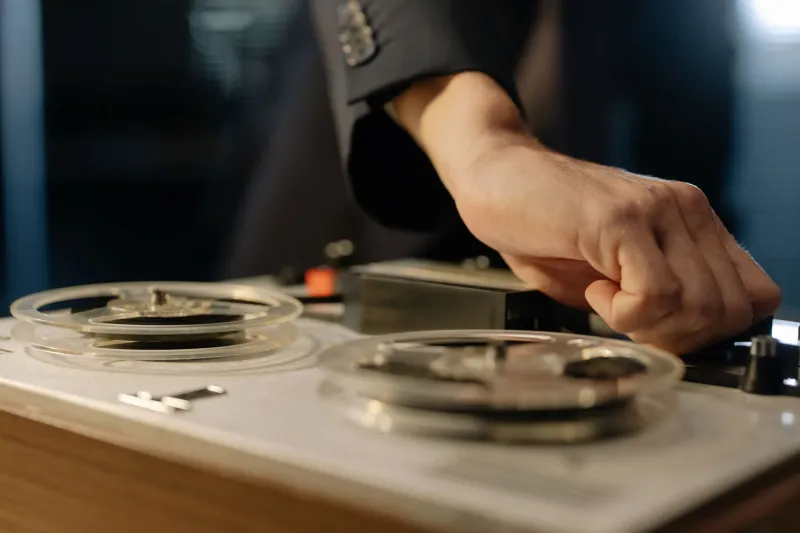
Built for Warmth: How UK Venues Are Letting Vinyl Culture Shape Their Walls
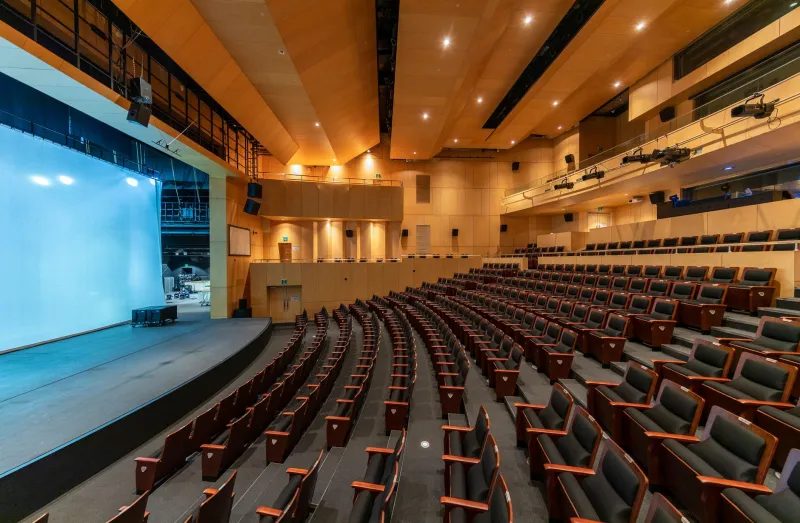
There's a moment every vinyl devotee knows instinctively. You drop the needle, the room fills with that particular warmth — a little breath of room tone, a slight give in the low end, a top end that never quite stabs at you. It's organic. It's physical. It feels, somehow, like the sound has weight.
Now imagine designing an entire building around that feeling.
That's precisely what a growing number of architects and acoustic engineers across the UK are attempting. Not metaphorically, not as a branding exercise — but literally, structurally, in the materials they specify and the geometry they draw. Vinyl culture, once confined to the listening room and the record shop, is quietly bleeding into the blueprints.
Why Now?
The timing isn't accidental. Over the past decade, as vinyl sales have climbed back to levels not seen since the late 1980s, something has shifted in what live audiences actually expect from a room. Younger gig-goers who grew up buying records at independent shops — or inherited their parents' collections — have developed an ear for a particular kind of sound. Not the clinical precision of a perfectly treated studio, and certainly not the ear-splitting wash of a badly managed festival stage. Something in between. Something that breathes.
"There's a generational thing happening," says acoustic consultant Rhys Pemberton, who has worked on several independent venue refurbishments across the Midlands and North West. "People who love vinyl aren't just passive listeners anymore. They come into a live room with expectations formed by years of listening at home on a decent deck. They can tell when a room is fighting the sound rather than holding it."
Pemberton points to what he calls the "over-treated trap" — the tendency in the 1990s and 2000s to line live spaces with dense acoustic foam and hard-edged reflective surfaces in an attempt to achieve maximum clarity. The result, he argues, was rooms that sounded technically correct but emotionally cold.
"Vinyl listeners don't want clinical. They want a room that sounds like it's alive."
Material Matters
So what does a vinyl-informed live space actually look like? The answer, perhaps surprisingly, involves a lot of wood.
Timber has become something of a touchstone material for acoustic designers working in this space. Unlike hard plaster or concrete, which reflect sound at sharp angles, wood diffuses it — scattering frequencies in a way that feels less harsh to the ear. It's the same principle that makes a well-kept wooden-floored listening room sound better than a tiled kitchen.
At a recently refurbished 300-capacity venue in Leeds — which asked not to be named ahead of its official reopening — the design team stripped back years of acoustic treatment and replaced it with a combination of reclaimed timber panelling, curved plaster diffusers, and heavy velvet draping. The goal, according to the lead designer, was to recreate the "envelope" of a listening room at scale.
"We kept asking ourselves: what does a record sound like in this room?" she explained during a site visit earlier this year. "Not what does a PA system sound like. What does the music itself sound like when the room is working with it?"
The distinction matters. A PA system, however well-engineered, is a layer between the audience and the music. The room itself — its volume, its surface materials, its geometry — is the layer underneath everything. Get that wrong and no amount of EQ will save you.
The Shape of the Sound
Beyond materials, geometry is where things get genuinely interesting. Traditional concert hall design has long favoured the shoebox — a rectangular room with high ceilings, beloved by classical acousticians for its even reverb tail. But vinyl-influenced designers are experimenting with something looser.
"The shoebox is brilliant for orchestras," says Pemberton. "But for a band playing through a PA to an audience that's used to listening on a home system, you want something a bit less formal. You want the room to feel like it's wrapping around you."
Some designers are taking inspiration from the physical shape of speaker cabinets and even turntable plinths — favouring slightly irregular geometries, angled walls, and asymmetric ceiling treatments that break up standing waves without deadening the room entirely. It sounds esoteric, but the results, in rooms where it's been tried, tend to be striking.
One acoustic engineer working on a new venue in Bristol described the process as "tuning the room like an instrument." The analogy is apt. A well-set-up turntable — properly levelled, with a correctly aligned cartridge — doesn't fight the record. It lets the record speak. The same principle, applied to architecture, produces spaces where the live performance has room to breathe rather than battling its own reflections.
The Vinyl Test
Perhaps the most telling detail in all of this is the way some design teams are now using vinyl playback as a calibration tool during the build process. Rather than relying solely on pink noise and frequency sweeps, they're bringing in turntables and playing records — often well-known, well-loved albums that the team knows intimately — to assess how the room handles music that people actually care about.
"There's something about playing a record in a half-finished room that tells you things the measurement software doesn't," says one engineer who's used the approach on two recent projects. "You hear where the room is fighting you almost immediately. And you hear when it stops fighting you, too."
It's a charmingly analogue solution to what is, at its core, an analogue problem. Vinyl, with its physical grooves and mechanical playback, is an inherently imperfect medium. Its warmth comes partly from its limitations. Designing a room that honours those qualities — that doesn't try to iron them out or compensate for them — requires a different kind of thinking than most acoustic briefs demand.
More Than Aesthetics
It would be easy to dismiss all of this as a niche obsession, a design trend dressed up in acoustic theory. But the venues leading this charge are seeing real results — not just in sound quality but in audience behaviour. People linger longer. They talk less during sets. They come back.
There's something almost philosophical about it. Vinyl culture has always been about slowing down, about paying attention, about the ritual of the listen. When a live room is built with those same values in mind, the audience feels it — even if they can't quite articulate why.
The needle drops. The room holds the sound. And for a moment, it's hard to tell where the record ends and the room begins.