Crates on Tour: The Touring Musicians Hunting Vinyl in Every City They Play
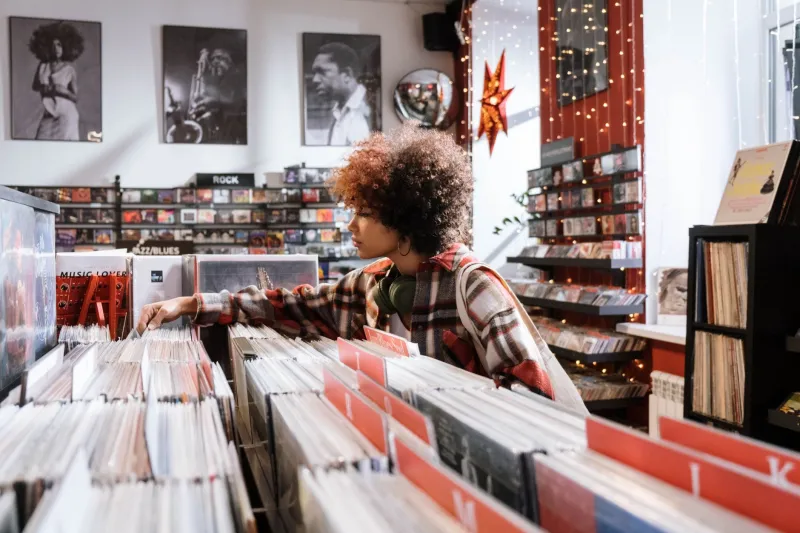
There's a particular kind of exhaustion that comes with being on tour in the UK. You've soundchecked in a venue that smells faintly of last night's lager, eaten a meal deal from the nearest Tesco, and you've still got four hours to kill before doors open. For a certain breed of musician, that window of time has one obvious use: find the local record shop.
It's become something of an open secret in British touring circles. While some artists spend their downtime scrolling through socials or napping in the van, others are methodically working their way through the racks at independent shops from Bristol to Dundee, building personal vinyl collections one tour stop at a time.
The Hunt Begins Before the Set List Does
Sam Reeves, guitarist with Leeds-based indie outfit The Harbour Lights, admits he now plans his pre-show schedule around record shops with the same seriousness he gives to rehearsal time. "I've got a little notes app going," he says, "with the best shops in every city we're likely to play. Vinyl Tap in Huddersfield, Assai in Edinburgh, Reckless Records when we're in London. Before we even book the tour, I'm already thinking about where I'm going to dig."
Reeves isn't alone. Talk to enough touring musicians and a pattern emerges — vinyl collecting has become one of the few genuinely grounding rituals available to artists whose lives are otherwise defined by constant movement. The record shop offers something the road rarely does: a quiet, unhurried space with no soundcheck anxiety, no promoter to chase, no merch table to man.
"It sounds daft," admits Sophie Clair, a folk singer-songwriter who tours extensively across the UK, "but walking into a shop in a city you barely know, flicking through the jazz section, finding something completely unexpected — it's one of the most calming things I do. The gig is electric and brilliant, but the record shop is where I actually breathe."
What the Road Turns Up
The finds themselves are often remarkable, partly because regional shops stock regional tastes. A pressing of a Welsh folk record that never made it to London. A Northern soul 7-inch that the shopkeeper has been sitting on for a decade. A locally recorded live album from a band that existed for eighteen months in the early eighties and left almost no digital trace.
For many touring musicians, these hyper-local discoveries have become the most valuable part of their collections — not necessarily in monetary terms, but in terms of what they carry back into the music.
Dan Ashworth, who plays keys in a post-rock band based in Manchester, describes picking up a battered copy of a privately pressed ambient record at a shop in Aberdeen as a turning point. "I'd never have found that online. The bloke behind the counter told me it was recorded in a church somewhere in the Highlands in 1979. I listened to it on headphones on the drive back down the A9 and it completely rewired how I was thinking about our next record. That texture, that space — it's all over what we ended up making."
Shopkeepers as Connectors
What's striking about these stories is how often the record shop itself becomes a point of genuine human connection — something touring life doesn't always provide in abundance. Shopkeepers who recognise a band's name, fans who happen to be flicking through the same section, local musicians who strike up conversations over a shared interest in an obscure pressing.
"I've made actual friends through this," says Clair. "There's a shop in Cardiff where the owner now texts me when something comes in he thinks I'd like. He came to the gig last time we played there. That relationship started because I wandered in off the street looking for something to do before a show."
Reeves tells a similar story about a shop in Glasgow where a customer recognised him mid-dig and ended up coming to the gig that night, bringing three friends. "He'd never heard of us before. He just saw me flipping through records, we got chatting, and by the end of it he'd bought a ticket on his phone standing next to the jazz section. That's not something that happens on Instagram."
The Weight of the Collection
Of course, building a vinyl collection on the road comes with an obvious practical problem: weight. Records are heavy. Vans have limits. And nobody wants to explain to a bandmate why the gear is sharing space with forty new LPs.
"There's a system," Reeves says, laughing. "I post things home. I've got a relationship with the Post Office in about six different cities at this point. The woman in the Sheffield branch knows my name."
Others are more disciplined about what makes the cut. Ashworth operates a strict one-in, one-out policy — though he admits it's broken more often than it's kept. "If it's genuinely something I've never seen before, or something that feels connected to wherever I am, it comes home. I try to be ruthless but records don't really let you be."
Sophie Clair has started incorporating her road finds directly into her live sets, sometimes introducing songs by referencing the record that inspired them. "I'll say, 'I found this album in a shop in Norwich last October and it made me write this song.' People love that. It makes the whole thing feel connected — the touring, the collecting, the music itself."
A Ritual the Road Demands
There's something quietly profound about the image of a touring musician, still buzzing from last night's show, standing in a side-street record shop in a city they'll leave before midnight, carefully lifting a sleeve to check the matrix number. It's unhurried in a life that rarely is. It's tactile in a world that's increasingly not.
For these artists, vinyl collecting on the road isn't a hobby that happens to coincide with touring — it's become inseparable from the whole experience of making and performing music. The records they find shape the sounds they make. The shops they visit shape the towns they remember. And the connections they stumble into remind them, in the best possible way, why any of this matters.
The gig might be the reason they're there. But the crate is why they'll remember the city.