Drop the Needle, Find Your Seat: The Venues Giving Vinyl Its Own Room
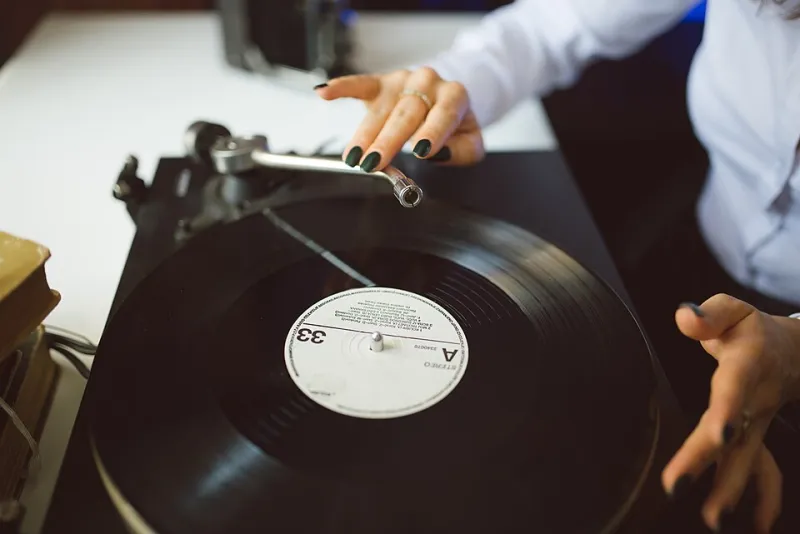
There's a particular kind of quiet that settles over a room when a needle finds its groove. Not silence, exactly — more like a collective exhale. If you've spent any time in one of the new vinyl listening spaces popping up inside UK live venues, you'll know precisely what that feels like. It's a very different energy from the main room, where the PA is warming up and the bar queue is already three deep. And that, it turns out, is entirely the point.
Across Britain, from Manchester's Northern Quarter to Bristol's Stokes Croft, a handful of forward-thinking venues are carving out dedicated rooms — some intimate, some surprisingly grand — where audiences can sit down with a record before the show, or decompress with one long after the encore. The trend is still young, but it's gathering pace, and it's reshaping how fans think about the full arc of a live music evening.
More Than a Waiting Room
For years, the pre-gig ritual was fairly predictable: arrive, check your coat, navigate to the bar, stand about. The listening room concept tosses that formula out entirely. Instead of killing time, you're spending it. Venues that have introduced these spaces report that audiences arrive earlier, stay later, and — perhaps most tellingly — spend more time engaging with the artists on the bill.
The logic is straightforward enough. If you're about to watch a band you've only half-heard of, spending twenty minutes with their back catalogue on a decent turntable does something that a Spotify playlist simply can't replicate. There's an attentiveness that vinyl demands — the physical act of choosing a record, reading the sleeve notes, waiting for the side to end — that primes you for the kind of focused listening a live show deserves.
It's not just about the headliners, either. Many venues are using their listening rooms to champion support acts and local artists who might not yet have the streaming numbers to draw attention online. A well-placed record in a curated stack can do more for a new artist than a dozen algorithmic recommendations.
The Venues Leading the Charge
Rough Trade has long blurred the line between record shop and live space — their East London and Nottingham sites have been hosting in-store performances for years — but they're increasingly deliberate about creating listening environments that complement their gig programme. The idea is less about selling records (though that happens too) and more about creating a mood, a context, a conversation between the music on wax and the music about to happen on stage.
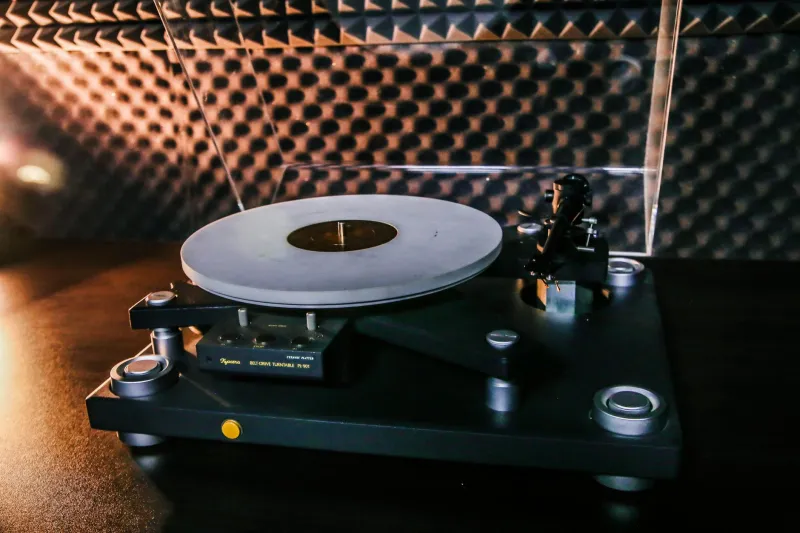
Smaller independent venues are taking the concept in their own directions. Some have gone full audiophile, investing in restored Thorens or Rega decks, proper valve amplifiers, and acoustic treatment that would make a recording studio blush. Others have kept things scrappier and more democratic — a couple of belt-drive turntables, mismatched armchairs, and a crate of records pulled from the owner's personal collection. Both approaches work, arguably for the same reason: they feel human in a way that a streaming playlist never quite manages.
In Glasgow, one venue has taken to commissioning local DJs to curate the listening room selection each week, treating it almost like a residency. The result is that the space has developed its own following, separate from the main gig programme — people who come specifically for the records, and occasionally drift through to catch whoever's playing that night.
The Vintage Turntable Question
It's worth asking why vintage, specifically. Why not a brand-new direct-drive deck with all the modern conveniences? The venues doing this well tend to give similar answers. There's an aesthetic dimension, obviously — a Garrard 301 or a Technics SL-1200 looks the part in a way that a sleek contemporary unit doesn't. But beyond appearances, there's something about the tactile imperfection of older equipment that suits the space.
Vintage turntables have character. They have history. The slight warmth of an older cartridge, the occasional surface noise from a well-loved pressing — these aren't flaws to be engineered out, they're part of the texture of the experience. For a venue that's already asking its audience to engage with music on analogue terms, it makes a kind of philosophical sense to lean into that rather than away from it.
There's also the practical matter of source material. Most of the records in these listening rooms are original pressings — bought from local shops, donated by regulars, sourced from estate sales and car boot finds. Playing them on modern equipment can sometimes expose their age in unflattering ways. On a vintage deck set up sympathetically, those same records can sound extraordinary.
What Audiences Are Actually Doing
Talk to the people using these spaces and a few patterns emerge. Many arrive alone and end up talking to strangers — the records providing a natural conversation starter that the main room's noise levels rarely allow. Couples use them as a decompression chamber after a gig, sitting with a nightcap and whatever the room happens to be playing. Younger audience members, many of whom came to vinyl through the mainstream resurgence of the mid-2010s, are using them to go deeper — chasing down the influences of artists they already love, following threads from one sleeve note to the next.
There's a generational dimension here that venues are starting to recognise. The under-30 crowd that's been buying records in record numbers — pardon the pun — didn't grow up with listening rooms. For them, vinyl has always been something you experience at home, or at a record fair, or occasionally at a shop. The idea that a live venue might offer that same intimacy, right alongside the visceral thrill of a full band in a packed room, is genuinely new. And from what people are saying, genuinely exciting.
The Bigger Picture
What's happening in these rooms is, at its core, an attempt to reclaim something that live music has occasionally lost sight of: the idea that the evening is bigger than the set list. The listening room doesn't compete with the stage — it extends the experience outward, giving audiences a reason to arrive with curiosity and leave with something more than a ringing in their ears.
For venues navigating a difficult economic landscape, there's a practical argument too. A listening room costs relatively little to establish and maintain, draws people in earlier, and creates the kind of word-of-mouth warmth that no marketing budget can reliably buy. More than one venue manager has noted, slightly sheepishly, that the listening room has become the thing people mention first when they recommend the venue to friends.
None of this is to say the format is without challenges. Curating a record collection takes time and knowledge. Maintaining vintage equipment requires expertise. And persuading a Friday-night crowd that sitting quietly with a record is a worthwhile way to spend twenty minutes before the doors open — well, that's an ongoing project.
But the venues that have committed to it seem convinced. The needle drops, the room shifts, and for a few minutes, the whole evening reframes itself around the music rather than the spectacle. That's not nothing. In fact, right now, it feels like quite a lot.