Horn Theory: The UK Venues Rewiring Their Sound Systems With Lessons From the Gramophone Age
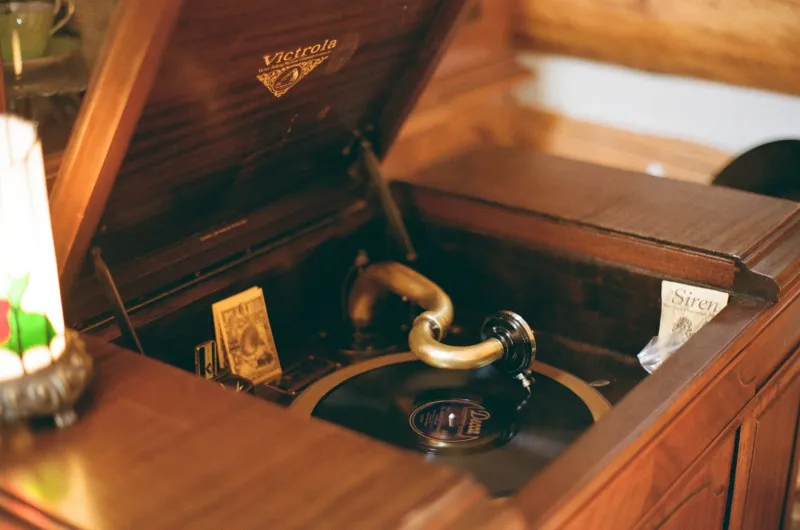
There is something quietly radical about walking into a live music venue and being handed a leaflet that references acoustic research from 1908. Yet that is precisely what happened at a recent listening event held at a refurbished Victorian ballroom in Leeds, where the management had pinned their entire sound system overhaul to principles borrowed from the exponential horn — the flared, resonant throat that made the wind-up gramophone sing across parlours long before electricity entered the picture.
This is not nostalgia for its own sake. Across Britain, a small but growing cohort of acoustic designers, sound engineers, and venue operators are making a serious technical argument: that the gramophone horn's natural approach to frequency dispersion — its ability to project mid-range warmth without artificial boosting — contains lessons that contemporary line array systems have quietly abandoned in pursuit of sheer volume and digital precision.
What the Old Horns Actually Did
To understand why anyone would look backwards for solutions, it helps to understand what made the gramophone horn remarkable in the first place. Unlike a flat speaker cone, which pushes air in a relatively uniform direction, the exponential horn expands at a mathematically calculated rate — widening gradually so that sound disperses evenly across a room without the harsh high-frequency spiking that plagues many modern speaker cabinets.
The result, in acoustic terms, is a kind of controlled bloom. Sound fills a space rather than attacking it. Mid-range frequencies — the register where human voices and most instruments live — are given room to breathe. There is no digital clipping, no aggressive compression. Just physics doing what physics has always done.
"The gramophone engineers weren't trying to be warm or vintage," explains Marcus Holt, an acoustic designer based in Bristol who has spent the past three years consulting on venue refurbishments across the South West and Midlands. "They were solving a real problem with the materials they had. But in solving it, they discovered something about how rooms and sound interact that we've been slowly forgetting ever since powered amplification made brute force an option."
Holt's current project — a 400-capacity venue in Digbeth, Birmingham, due to open later this year — has been designed from the ground up with horn-loaded speaker cabinets positioned at angles derived from studying the dispersion patterns of mid-century radiogram horns. The ceiling baffling has been shaped to mimic the reflective properties of the curved horn throat.
Who's Leading the Charge
Birmingham is not alone. In Glasgow, The Viaduct Sessions — a venue carved out of a converted railway arch — completed a partial horn-loaded PA installation last autumn, pairing vintage-style horn tweeters with modern subwoofer technology to create what the venue's technical director describes as a "hybrid warmth." Early audience feedback, she says, has been striking.
"People kept saying the sound felt closer," says Donna Rafferty, who oversaw the project. "Not louder, not clearer — closer. Like the music was happening nearer to them than it physically was. That's the horn effect. It narrows the perceived distance between the source and the listener."
In London, a Grade II listed music hall in Hackney has taken a more conservative approach, retrofitting horn-loaded mid-range drivers into an otherwise conventional PA rig. The venue's sound engineer, who asked not to be named, admits the results have been "contentious" among the regular touring engineers who bring their own preferences through the door. "Some of them love it immediately. Others spend the first hour fighting it because they're used to mixing for a brighter, more aggressive top end. The horn doesn't like being pushed that way."
That resistance is telling. Horn-loaded systems demand a different mixing philosophy — one that prioritises natural dispersion over engineered loudness, and trusts the room to do some of the heavy lifting. For engineers trained on digital rigs in modern arenas, that handover of control can feel uncomfortable.
The Philosophical Argument
Beyond the technical specifics, there is a broader argument being made here — one that sits comfortably within the vinyl revival that has been reshaping British music culture for the better part of a decade. The same audiences who have returned to records in search of analogue warmth are, the thinking goes, increasingly aware of how live sound feels as much as how it measures.
"Vinyl listeners develop an ear," says Holt. "They start noticing things — the way a room responds, the way a frequency sits in a mix. They come to gigs with higher expectations of texture. They're not just there for volume. They want the same kind of presence they get at home with a good turntable and a decent pair of speakers."
It's a compelling thought. If the vinyl revival has taught audiences to value warmth, depth, and spatial honesty in recorded sound, then venues that can replicate those qualities in a live setting are arguably better positioned to serve that audience. Horn acoustics, in this reading, are not a retro affectation — they are a direct response to what listeners are already asking for.
Does It Actually Work?
The honest answer, based on conversations with designers, engineers, and punters who have experienced these installations, is: sometimes, brilliantly — and sometimes, not quite as advertised.
Horn-loaded systems perform best in rooms with specific acoustic properties: moderate volume, controlled reverb, and audiences that don't exceed the system's natural projection range. Push a horn-loaded PA into a 2,000-capacity shed with a corrugated metal roof and the warmth can tip into muddiness. The physics that make them sing in a 400-seat Victorian ballroom can work against them in a venue designed for maximum capacity rather than acoustic character.
"There's no magic bullet," admits Rafferty. "You have to design the room and the system together. If you just drop horn cabinets into a space that was built for a conventional rig, you might get something beautiful or you might get a mess. It depends entirely on the room."
That caveat matters. The most successful installations in Britain right now are those where the acoustic philosophy has informed the entire design process — walls, ceilings, seating angles, and speaker placement all considered as a single system rather than a collection of independent components.
The Sound of What's Coming
Whether this becomes a genuine movement or remains a niche pursuit among the acoustically obsessed probably depends on economics as much as aesthetics. Horn-loaded speaker cabinets are expensive, installation is complex, and the mixing skills required to get the best from them are not universally held. Venues operating on tight margins may struggle to justify the investment.
But something is clearly shifting. The conversations happening in basement venues in Leeds and railway arches in Glasgow feel less like hobbyist experimentation and more like the early stages of a genuine rethink — a collective decision to ask whether louder and cleaner is always the same as better.
The gramophone engineers of a century ago didn't have that choice. They worked with wood, brass, and mathematics, and they produced something that still, apparently, has lessons worth learning. If Britain's live venues are willing to listen, the old horns might just have one more song left in them.