Strings Attached: How Britain's Orchestras Are Chasing the Vinyl Sound on the Concert Stage
There's a particular moment on a well-pressed vinyl record — that breath before the first note, the faint room tone caught by a microphone fifty years ago — that no digital file has ever quite managed to replicate. Britain's classical musicians know that feeling. And increasingly, they're trying to recreate it live.
Across the country, from converted Victorian theatres in Manchester to candlelit chapel spaces in Edinburgh, a growing number of orchestras and chamber ensembles are rethinking what a classical concert should sound like. Not by going backwards, exactly. More like going sideways — reaching toward the tonal warmth, the spatial intimacy, and the unhurried listening culture that vinyl has always stood for.
Why Vinyl Now?
It might seem an unlikely pairing. Classical music and vinyl have always coexisted, of course — the format's 12-inch canvas was practically designed for the symphony, and the golden age of orchestral recording in the 1950s and 60s produced some of the most beloved pressings in existence. But the idea of vinyl culture — its philosophy, its pace, its almost meditative relationship with sound — actively influencing how live classical performances are staged? That's newer territory.
Part of the shift is generational. Younger audiences who've grown up buying records at independent shops, attending vinyl listening nights, and generally treating music as something to be experienced rather than consumed on shuffle, are now showing up to classical concerts. And they're arriving with expectations shaped by that culture: they want presence, warmth, and the sense that something unrepeatable is happening in the room.
"We noticed that a lot of the people coming to our smaller events were the same crowd you'd find at a record fair on a Saturday morning," says one artistic director at a chamber ensemble based in Bristol. "They weren't necessarily classical heads. They were just people who cared about how music actually sounds."
Smaller Rooms, Bigger Warmth
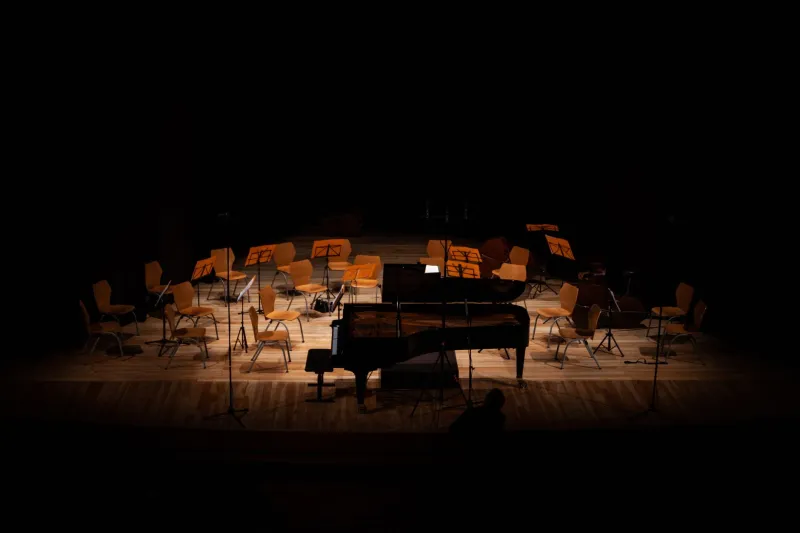
One of the most visible changes is the deliberate move away from cavernous concert halls toward venues with more natural acoustic intimacy. Several ensembles have begun prioritising spaces where the relationship between performer and listener feels closer — where you can hear the rosin on a bow, the breath before a phrase, the natural decay of a note without it being swallowed by a thousand empty seats.
The logic maps almost directly onto vinyl listening. When you drop the needle on a classic Deutsche Grammophon pressing from 1963, you're not just hearing the performance — you're hearing the room, the air, the physical presence of the musicians. Live events that chase that same quality tend to strip things back: fewer microphones, less reinforcement, more trust in the acoustic environment itself.
The Southbank Centre's smaller spaces have seen increased bookings for this kind of stripped-back classical programming. Similar patterns are emerging in Birmingham, Leeds, and Glasgow, where mid-sized venues with good natural acoustics are becoming preferred stages for ensembles interested in what you might call analogue-first performance.
What the Old Records Are Teaching Today's Players
Perhaps the most fascinating thread running through all of this is the way musicians are returning to historical vinyl recordings not just for enjoyment, but as a genuine interpretive tool.
Several players have spoken about spending time with mid-century pressings of works they perform regularly — Furtwängler conducting Brahms, Klemperer with Beethoven, early Decca recordings of the Vienna Philharmonic — and finding that the experience changes how they approach the music. Not in an imitative sense, but in terms of understanding how phrasing, tempo, and dynamic range once felt more elastic, more personal, less corrected.
"There's a freedom in those recordings that got ironed out somewhere along the way," says one cellist currently touring with a period-instrument ensemble. "When you listen on vinyl, you hear the risk. You hear people making choices in real time. That's what we're trying to get back to on stage."
The analogue medium itself arguably plays a role here. Vinyl compresses and shapes audio in ways that digital formats don't, and the result is a listening experience that rewards attention rather than demanding it. Musicians who spend time with these recordings often describe a shift in how they think about dynamics — the quiet moments become as loaded as the loud ones, which is exactly the kind of interpretive thinking that translates beautifully to a live room.
Turning Down the Volume (On Purpose)
Reduced amplification is another area where the vinyl influence is making itself felt. A number of UK ensembles have started explicitly marketing concerts as "acoustic" or "unamplified" events, framing the absence of a PA system as a feature rather than a limitation.
For audiences already accustomed to the intimacy of a home listening session — needle down, lights low, no compression algorithms in sight — this approach has obvious appeal. It positions the concert as a shared version of a private ritual, which is precisely the kind of framing that resonates with vinyl culture's more devotional tendencies.
The Wigmore Hall in London, long regarded as one of the finest chamber music venues in the world partly because of its extraordinary natural acoustics, has seen renewed interest from younger programmers keen to lean into exactly this quality. Elsewhere, arts organisations in regional cities are actively seeking out similar spaces — church halls, old library reading rooms, industrial conversions with exposed brick and timber — that offer that same sense of acoustic honesty.
Is It Working?
Early signs suggest yes, at least in terms of audience diversity. Ensembles that have leaned into this approach report noticeably younger rooms, with attendees who might never have considered a classical concert now turning up because the framing speaks their language.
There's something fitting about it, really. Vinyl culture has always been about paying proper attention — about slowing down, listening actively, and respecting the physical reality of recorded sound. Classical music, at its best, asks exactly the same thing of its audience. The two were always going to find each other eventually.
Whether this becomes a lasting shift or a passing trend probably depends on whether the programming can keep pace with the appetite. But for now, Britain's orchestras are discovering something rather useful: that the people who love records and the people who love live music are, more often than not, exactly the same people. They just needed someone to build a room that felt right for both.