What the Lathe Taught the Live Desk: Inside the New Wave of Vinyl-Informed Sound Engineering
There's a moment in any good concert when the sound just locks in. The low end sits where it should, the vocals cut through without effort, and the whole room feels like it's breathing together. Most people in the audience assume that's down to luck, or maybe the band having a good night. The engineers who've been spending time in vinyl mastering suites recently know it's something else entirely.
Across the UK, a quiet but genuinely fascinating cross-pollination is happening between two disciplines that have rarely talked to each other: live sound engineering and vinyl mastering. A handful of technically curious engineers — based everywhere from Bristol to Glasgow — have started embedding themselves in mastering rooms and pressing plants, not because they want to cut records, but because they want to understand what the lathe refuses to accept. And what they're learning is reshaping how they approach the mixing desk every single night.
The Physics Lesson Nobody Asked For
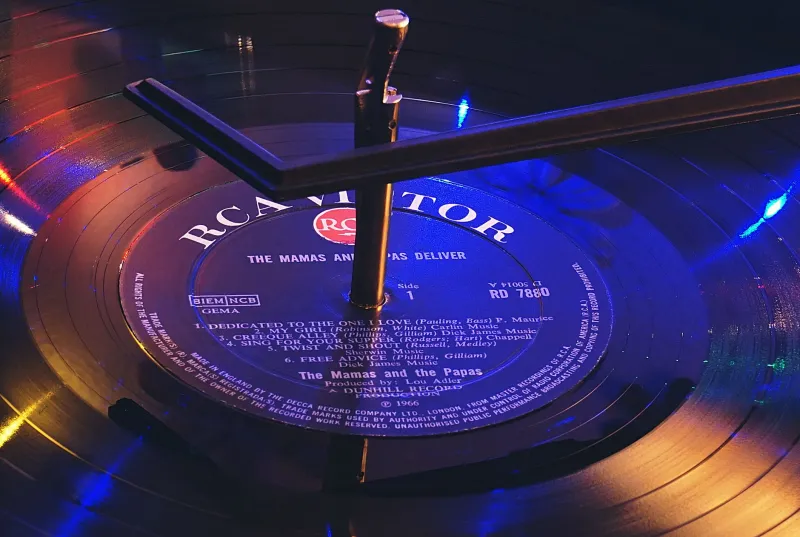
Vinyl mastering operates under a set of constraints that are entirely physical. The cutting lathe carves a groove into a lacquer disc, and that groove has to do an enormous amount of work within a very small space. Too much low-frequency energy and the groove walls collapse into each other. Too much high-frequency sibilance and the stylus skips. Stereo width in the bass has to be almost entirely eliminated, or the needle simply won't track properly. These aren't aesthetic choices — they're the unforgiving demands of physics.
For Manchester-based live engineer Deb Harcastle, who spent three weeks shadowing a mastering engineer at a studio in Salford last year, the experience was something close to a revelation. "I walked in thinking I'd pick up a few tips about EQ," she says. "I walked out understanding that every decision a mastering engineer makes is essentially about making something complex survive a physical medium. And I thought — that's exactly what I'm doing. I'm trying to make something complex survive a room full of people."
The parallel isn't as loose as it might first appear. A concert mix, like a vinyl master, has to work within constraints that are partly technical and partly human. Rooms have resonant frequencies that will fight you. PA systems have their own coloration. And the human ear, crucially, has limits — it fatigues, it loses sensitivity at certain frequencies under sustained volume, and it responds to dynamics in ways that no meter can fully measure.
Learning to Hear What Doesn't Work
What mastering has taught several of these engineers is a more rigorous approach to what might be called subtractive thinking — the discipline of removing rather than adding. In vinyl mastering, the instinct to pile on is constantly punished. A bass boost that sounds exciting in the studio becomes a groove-width disaster on the lathe. Excessive reverb in the mid-range turns into a smeared, unreadable mess when pressed.
Live engineers, historically trained in an additive culture — more compression here, more presence there — are finding that the mastering mindset flips their instincts usefully. "I used to reach for the EQ boost as a first response," admits Edinburgh-based front-of-house engineer Marcus Fenn, who has been working with a pressing plant in central Scotland to better understand the pressing process. "Now I ask what's getting in the way first. Nine times out of ten, there's something muddying the picture that I can pull back, rather than something missing that I need to push forward."
Fenn has started applying what he calls a "lathe test" to his live mixes — a mental exercise in which he imagines whether his current mix would survive being cut to disc. If the low end is fighting itself, it wouldn't. If the stereo image is too wide in the bass, it wouldn't. It's a discipline that, he says, forces him to make cleaner, more considered decisions in real time.
The Room as the Medium
The other major lesson coming out of these mastering-room pilgrimages is a renewed respect for the idea that the medium shapes the message. Vinyl sounds the way it does partly because of its constraints — the warmth, the compression, the gentle roll-off at the frequency extremes. Those aren't bugs; for many listeners, they're the entire point. The medium has a character, and the best mastering engineers work with that character rather than against it.
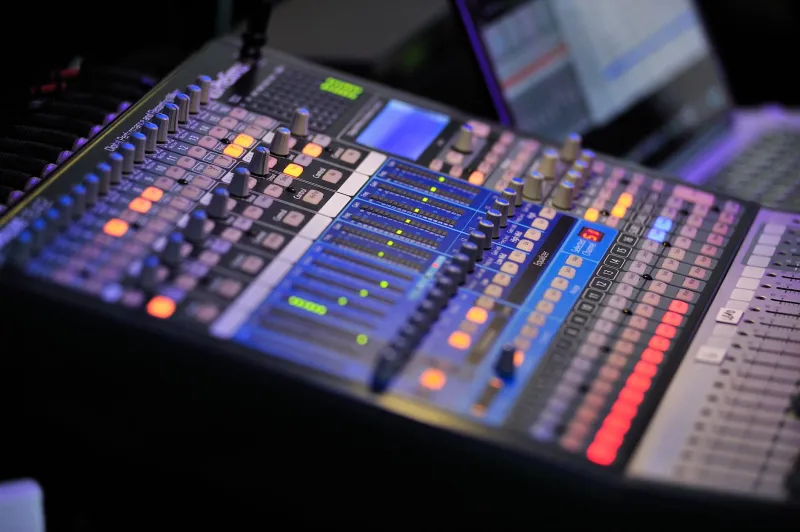
Live engineers are increasingly applying the same thinking to rooms. Rather than treating a venue's acoustic character as an obstacle to be neutralised, some are beginning to treat it as a medium with its own properties — something to understand and collaborate with. "A room like the Barrowland in Glasgow has a sound," says Harcastle. "Audiences come partly for that sound. My job isn't to erase it. It's to work within it, the same way a mastering engineer works within what the lathe allows."
This shift in perspective has practical implications for how engineers set up systems. Some are running less aggressive room correction than they might have previously, allowing more of the venue's natural character to come through. Others are being more conservative with their low-end deployment — taking cues from the mastering principle that less controlled bass energy is more damaging than too little.
A New Generation at the Desk
The engineers driving this movement tend to be in their thirties — old enough to have come up through traditional live sound training, young enough to have grown up with vinyl's revival and to take the format seriously as a reference point rather than a nostalgia trip. Several have started sharing notes informally, meeting at events like the UK's various audio engineering trade gatherings, or simply comparing observations online.
What's emerging isn't quite a school of thought yet, but it has the texture of one forming. There's a shared vocabulary developing around concepts borrowed from mastering — headroom, groove geometry, the relationship between transient response and perceived loudness — being translated into live sound contexts in ways that are genuinely novel.
For the audiences on the receiving end, the effects are difficult to articulate but easy to feel. Mixes sound less effortful. The low end sits rather than booms. Vocals are present without being aggressive. There's a kind of ease to it — the sonic equivalent of a sentence that reads cleanly on the first pass.
"Vinyl taught me to respect what I can't hear as much as what I can," says Fenn. "The frequencies that aren't there, the space between the notes — that's where the music actually lives. The lathe knew that before I did."
It's a lesson the live desk is only now beginning to catch up with. And if the results coming out of venues across Britain are anything to go by, the education is very much paying off.