Groove Logic: The Mastering Engineers Teaching Britain's Live Sound Desks a New Language
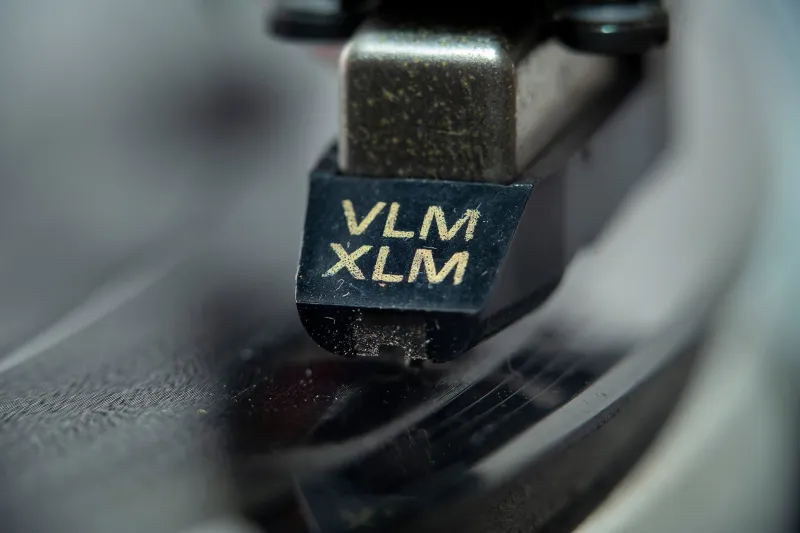
There's a moment in any mastering session where the lathe makes the decision for you. Push the low end too hard, crowd the stereo field, or lean on the limiter a touch too enthusiastically, and the cutting stylus will simply refuse to cooperate. The groove closes up. The needle skips. The record — and your session — is done.
For a growing number of British sound engineers who've started crossing between the mastering suite and the live desk, that moment of physical resistance has become something of a revelation. Because the discipline required to cut a record that actually plays correctly, it turns out, is almost exactly the discipline required to mix a live show that actually sounds brilliant.
When Physics Becomes the Best Teacher
Vinyl mastering operates under constraints that digital formats simply don't share. Bass frequencies need careful management — too much energy in the low end, particularly if it's not centred in the stereo image, and the cutting stylus starts chewing into adjacent grooves. High-frequency sibilance can cause distortion that even the most forgiving cartridge won't forgive. And compression, that great crutch of modern mixing, needs to be used with genuine surgical precision rather than as a sonic wallpaper gun.
"When you're cutting for vinyl, you can't hide," says Tom Hargreaves, a Manchester-based mastering engineer who has spent the last three years also working live front-of-house for mid-sized UK tours. "Every decision you make is physical. The stylus is literally carving your choices into a piece of lacquer. There's no undo button, and there's no loudness normalisation to bail you out."
Hargreaves started noticing something after his first few mastering projects: he was returning to live gigs with a fundamentally different instinct. "I was pulling back on the compressors. I was giving the low end more space. I was actually listening to the transients of the drums rather than just smashing them into a consistent wall of sound. And the mixes were better. The rooms were responding better. The bands were happier."
The Compression Conversation
Compression has long been a live sound engineer's best friend and worst habit. In noisy, unpredictable room environments — where a chatty crowd at the bar can shift the perceived dynamic range of a performance in seconds — reaching for the compressor feels instinctive, protective even. But mastering engineers who've spent time fighting vinyl's limitations are starting to question whether that instinct has become a crutch.
"Vinyl taught me that compression is a choice, not a default," says Leeds-based engineer Priya Mehta, who splits her time between a mastering suite in the city's Meanwood district and live work across Yorkshire's independent venue circuit. "When you're cutting, you use compression to protect the groove, not to make everything sound big and exciting. That's a completely different mindset. And once it's in your head, you can't unmix it."
Mehta describes a recent show at a 400-capacity venue in Sheffield where she consciously stripped back her compression chain for the headlining set. "It was terrifying at first. You're so used to that safety net. But the dynamics that came through — the quiet verse, the explosive chorus — the audience physically reacted differently. You could feel it in the room."
That relationship between dynamic range and audience response is something the vinyl mastering world has understood for decades. The warmth that listeners describe when talking about records isn't just nostalgia or frequency response — it's the presence of genuine dynamic movement. Music that breathes.
Stereo, Space, and the Problem of Width
Another area where vinyl's constraints are feeding back into live practice is stereo imaging. For a record to track reliably, bass frequencies need to be kept largely mono — wide, out-of-phase low end is a direct route to a skipping needle and a ruined lacquer. Mastering engineers learn quickly to think about the mono compatibility of their mixes in a way that many live engineers, working in stereo-heavy PA setups, simply don't.
"I started checking my live mixes in mono more regularly after doing mastering work," says Hargreaves. "And I was horrified by what I found. All this low-mid build-up, all this muddiness that I hadn't even noticed because I was so used to hearing it spread across a wide stereo field. Mono collapsed it all into one place and suddenly the problems were obvious."
This kind of rigorous mono-checking is now becoming more common among engineers who've spent time in the mastering world, and several UK venues — particularly the smaller, acoustically awkward rooms that make up the backbone of Britain's grassroots music scene — are reportedly benefitting directly as a result.
Musicianship Through the Mix
Perhaps the most unexpected outcome of vinyl's influence on live sound engineering is a renewed focus on what's actually being performed. When you're not papering over dynamics with compression, not widening the stereo image to create a false sense of scale, and not pushing levels simply because you can, you're suddenly forced to listen to what the musicians are actually doing.
"Vinyl makes you respect the performance," says Mehta. "Because the performance is all you've got. You can't fix it in the groove the way you might fix it in a DAW. And that transfers to live work — you start hearing the musicians more clearly, responding to them more directly, mixing the show they're actually playing rather than the show you assumed they'd play."
For the bands themselves, this shift can be noticeable. Several UK touring acts have commented — sometimes in bewilderment — that their sound has changed markedly when working with engineers who've come through mastering backgrounds. Less dense, more open, more alive to the ebb and flow of a set.
A Two-Way Education
It's worth noting that the learning doesn't only flow one direction. Mastering engineers who've spent time behind a live desk are returning to their suites with a sharper sense of how music actually behaves in a room, how a crowd responds to frequencies, and how the social context of listening shapes perception in ways that studio headphone work simply can't replicate.
"Live is the ultimate reference," says Hargreaves. "You can have the best monitoring setup in the world, but nothing tells you whether a mix is working like a room full of people who've paid to be there."
That cross-pollination — mastering informing live, live informing mastering — feels like something genuinely new in British audio culture. And at the centre of it all, quietly insisting on its own physical logic, is the vinyl groove.
Some lessons, it seems, you can only learn by almost breaking something irreplaceable.