One Take, One Pressing: The British Artists Cutting Live Records in Real Time
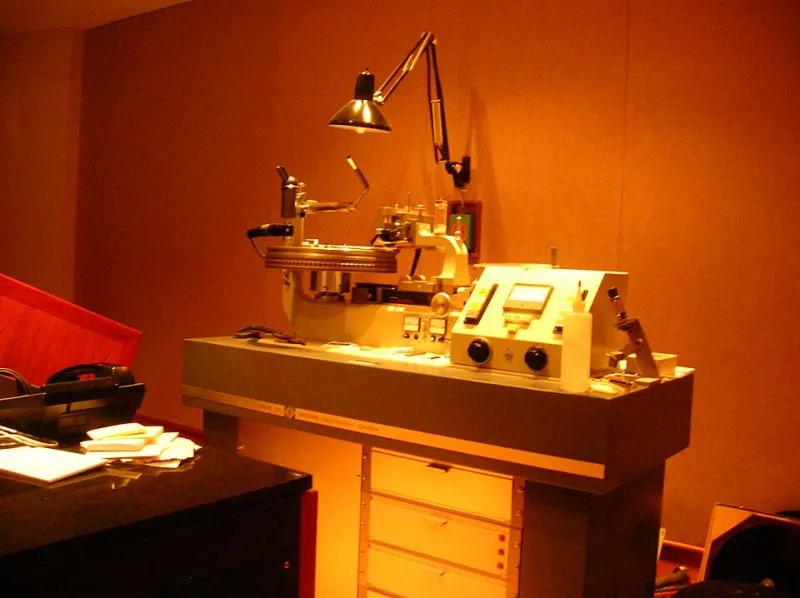
Photo: VACANT FEVER, CC BY-SA 2.0, via Wikimedia Commons
Imagine leaving a gig clutching not a crumpled ticket stub or a slightly damp tour programme, but an actual vinyl record — cut from the performance you've just witnessed, still warm in its sleeve. Not a studio album. Not a live recording released eighteen months later after extensive post-production. A direct physical document of the exact show you attended, pressed in limited numbers while the encore was still echoing.
This isn't a hypothetical. It's happening right now, at venues across the UK, and it's rewriting the relationship between live performance, recorded music, and the collectors who love both.
Digging Up a Buried Tradition
Direct-to-disc recording — capturing audio by cutting a lacquer master in real time, without the intermediary step of magnetic tape or digital recording — is not a new idea. The technique predates multitrack recording entirely; it was simply how records were made until the mid-twentieth century. A handful of labels revived it in the 1970s as an audiophile novelty, celebrating its uncompressed, unedited sonic purity. Then it largely faded again.
What's different now is context. The artists and labels embracing direct-to-disc in 2024 aren't doing it primarily as a technical exercise or a hi-fi demonstration. They're doing it as a statement about presence, authenticity, and the value of being there.
"We'd been thinking about what makes a live show genuinely irreplaceable," explains Rosa Tanner, who manages a Bristol-based folk-jazz quartet that cut its first live-to-disc record at a sold-out show at the city's Marble Factory last autumn. "Streaming has made music infinitely available. We wanted to make something that was the opposite of that — something you could only have if you were standing in that room on that night."
The band worked with a mobile cutting engineer who brought a portable lathe to the venue. A limited run of records — pressed on-site in the days immediately following the show — was made available only to ticket holders, collected from the venue's bar the following weekend.
"They sold out in about forty minutes," Tanner says. "People were messaging us saying it was the best thing they'd ever owned."
The Technical Tightrope
There's a reason direct-to-disc fell out of fashion. It is, by any reasonable measure, an unforgiving process.
In a conventional recording setup, mistakes can be edited out. Levels can be adjusted in post. A bassist who fluffs a transition in the second verse can be comped from another take. Direct-to-disc offers none of these luxuries. The lathe cuts in real time, and what goes into the room comes out on the record — including every imperfection.
"There is absolutely no safety net," says Marcus Webb, a cutting engineer based in London who has worked on several live-to-disc projects at UK venues over the past two years. "If the singer coughs between verses, it's on the record. If a monitor feeds back for half a second, it's on the record. You're committing everything to lacquer as it happens."
The mastering chain — the signal path from microphone to cutting head — must be optimised in advance with almost no room for adjustment during the performance. Webb describes his pre-show preparation as meticulous to the point of obsession: testing levels, checking frequency response, anticipating how the room's acoustics will change as it fills with people.
"A full room absorbs differently than an empty one," he explains. "The low-end changes, the high-end changes. I'm essentially making educated guesses about how the mix will translate before the audience has even arrived."
For artists, the psychological dimension is equally significant. Knowing that every note is being committed permanently to a physical medium — one that cannot be revised, remixed, or quietly deleted — changes the nature of performance itself.
"It makes you incredibly present," says Jamie Alderton, a guitarist who participated in a live-to-disc session at a venue in Glasgow's Merchant City earlier this year. "You can't coast. You can't think about the next song while you're playing the current one. Every moment matters because every moment is being preserved."
What It Actually Sounds Like
Beyond the conceptual appeal, there's a sonic argument for direct-to-disc that enthusiasts make with considerable passion.
Because the signal passes from microphone through the cutting head without entering a digital domain, there's no analogue-to-digital conversion and no digital-to-analogue conversion. The result, proponents argue, is a more coherent, dynamically alive recording — one that captures the full energy of a live performance without the subtle compression and quantisation artefacts that digital processes introduce.
"It sounds like you're in the room," says Tanner. "When you play it back, you can hear the space — the reverb of the venue, the way the sound moves. It's not just a recording of the music. It's a recording of a place and a moment."
Not everyone is convinced the sonic differences are as dramatic as advocates claim, but there's broad agreement that the format has a character — a rawness, an immediacy — that suits certain kinds of music particularly well. Jazz, folk, and stripped-back acoustic performances have proven natural fits. Several independent UK labels are now actively seeking live-to-disc projects, sensing an appetite among collectors for exactly this kind of unrepeatable artefact.
The Collector's Equation
For the vinyl community, direct-to-disc live recordings represent something genuinely rare: an object whose value is inseparable from the experience of obtaining it.
Record collecting has always had a scarcity dimension — the thrill of finding a first pressing, a coloured variant, a regional release. But those objects can, in theory, be acquired secondhand, tracked down online, discovered in a crate at a market. A record that exists only because you were at a specific gig, and was only sold to people who attended that show, carries a provenance that no amount of money can entirely replicate after the fact.
"People are already asking me what these will be worth in twenty years," laughs Tanner. "But I don't think that's really the point. The point is the story attached to the object. The fact that you were there."
Secondhand copies of live-to-disc releases are beginning to appear on Discogs and at UK record fairs, typically commanding significant premiums. The irony — that artefacts designed to celebrate presence are now circulating among people who weren't present — isn't lost on the artists involved. But most seem relaxed about it.
"Music wants to travel," says Alderton. "If someone buys our live record secondhand and it means something to them, that's still a win. The original buyers got the full experience. Everyone else gets a piece of it."
A Different Kind of Souvenir
What's emerging, slowly but unmistakably, is a new model for thinking about the relationship between live music and physical media. Not the album as a standalone commercial product, not the live record as an afterthought — but the performance and the pressing as a unified, inseparable event.
For a music culture that has spent the better part of a decade wrestling with questions about the value of recorded music, there's something quietly radical about that idea. The show doesn't end when the house lights come up. It continues, in a groove, on a shelf, in a home somewhere across the UK — playing back a moment that can never be exactly repeated.