Paper Over Pixels: The British Performers Swapping Screens for Sleeve Notes on Stage
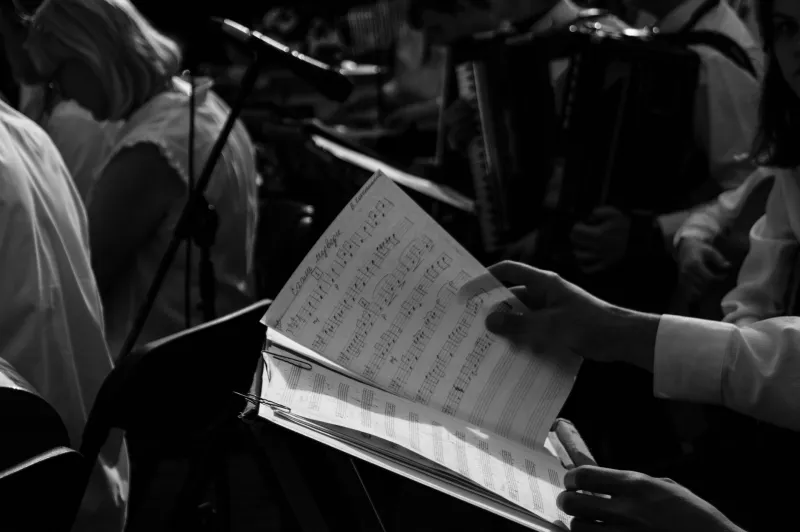
There's a moment, mid-gig, when you can sometimes spot it. The guitarist leans over to the monitor engineer, not to squint at a tablet mounted to the side-fill, but to glance at a folded piece of paper tucked beside the wedge. Scrawled in biro. Maybe a bit crumpled. Completely illegible from the third row. And somehow, that tiny act — that reaching for something physical — seems to settle the whole stage.
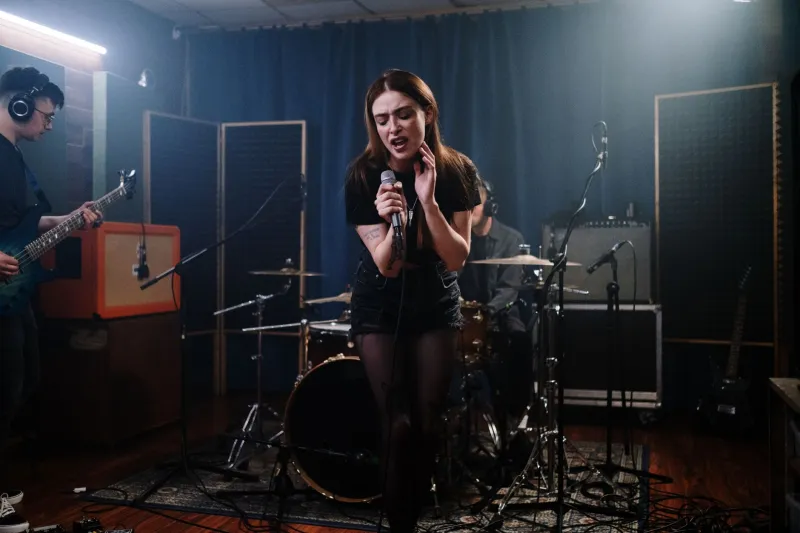
It's not a massive movement yet, but it's real. Across venues from the Barbican to Band on the Wall, a growing number of British performers and their crews are quietly abandoning digital setlist displays and reverting to something far older: handwritten notes, vinyl inner sleeves, and the occasional dog-eared bit of card that's been through a tour bus washing machine at least once. The screens haven't gone dark entirely, but they're increasingly sharing space — or losing ground entirely — to paper.
So what's actually driving this?
The Problem With the Glow
Ask any front-of-house engineer who's worked the circuit over the last decade and they'll tell you the same thing: digital got very good, very fast, and then everyone just... stopped questioning it. Setlist apps, wireless stage displays, LED prompters that can be updated from a laptop in the wings — all of it arrived and was absorbed without much debate.
"You just accepted it because it was convenient," says one monitor engineer who's worked with several mid-size UK touring acts. "But convenience isn't the same as connection. I started noticing that some artists were almost reading their own show rather than feeling it. There's something about a screen that puts you at a slight remove."
That slight remove is the crux of it. A screen, however useful, carries associations — email, notifications, the creeping anxiety of the always-on world. A handwritten note carries none of that. It carries only what was put there, in the moment it was written, by a human hand.
For performers who've spent years immersed in vinyl culture — who understand instinctively that a record sleeve is a physical object with texture and intent — the leap back to paper isn't especially dramatic. It feels, for many of them, like coming home.
The Sleeve as Stage Manager
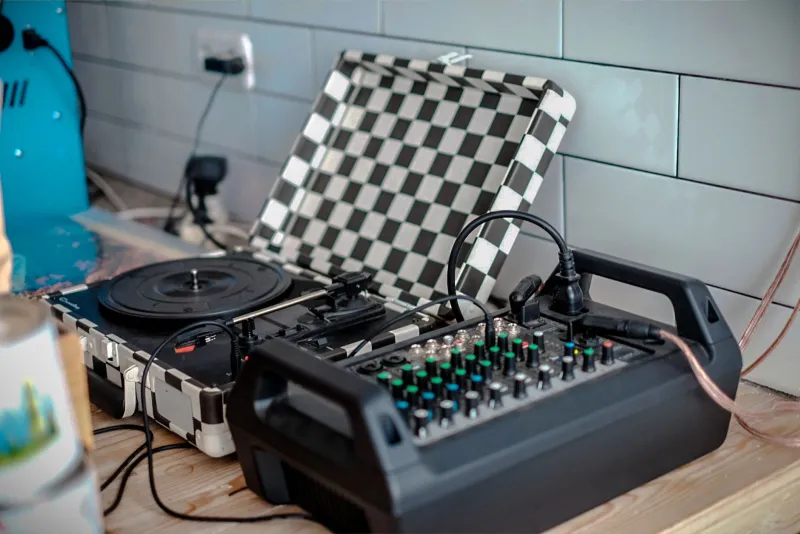
One particularly interesting strand of this trend involves vinyl sleeves themselves being brought into the wings or placed on stage monitors as reference points. Not as a gimmick, and not for the audience's benefit — they're usually invisible to anyone beyond the first row — but as a genuine navigational tool for the performer.
A folk artist based in Edinburgh describes keeping the inner sleeve of a favourite record on her piano during soundcheck, using the track listing and her own handwritten annotations as a loose guide for how she wants the set to flow. "It's not a rigid plan," she explains. "It's more like a conversation with myself about what the music actually is. When I look at that sleeve, I'm reminded of why I fell in love with these songs in the first place. A setlist app doesn't do that. It just tells me what comes next."
The distinction she's drawing is subtle but important: the difference between instruction and inspiration. A digital prompt tells you to play the song. A vinyl sleeve — with its artwork, its liner notes, its faint smell of cardboard and age — reminds you why the song matters.
Engineers Are Noticing the Difference
It's not just performers who've clocked the shift. Sound engineers and production managers are reporting changes in the rhythm of shows when artists move away from screens.
The consensus, anecdotally at least, is that sets tend to breathe more naturally. Gaps between songs feel less mechanical. Artists are more likely to make spontaneous decisions — dropping a song, extending an outro, calling an audible on the running order — when they're not anchored to a digital display that makes deviation feel like a malfunction.
"There's a psychological thing that happens with a screen," one production manager explains. "It implies a correct sequence. Paper implies a suggestion. That sounds like a small difference, but on stage, in front of two thousand people, it's enormous."
Several engineers have also noted that handwritten cue cards, being unique physical objects, force a kind of intentionality that templates don't. When you write something by hand, you've already thought about it. You've already committed. That pre-commitment, they argue, translates into a more assured performance.
The Vinyl Connection
It's worth pausing on why this trend is happening now, and why it's so closely linked to the broader vinyl revival rather than being a standalone quirk.
For a generation of British musicians who grew up buying records — who learned songs by reading sleeve notes and absorbed an album's logic by holding it in their hands — there's an inherent coherence to the idea that live performance should also have a physical grammar. Vinyl taught them that sequence matters, that the gap between tracks is meaningful, that the whole is greater than the shuffled sum of its parts.
Bringing that sensibility on stage is, in a sense, the logical extension of everything the vinyl revival has been arguing for years: that tangible, deliberate, human-scaled things produce a different quality of experience than their frictionless digital equivalents.
A touring musician who plays regularly at venues across the North of England puts it plainly: "I've got a copy of an album that basically taught me how to write songs. I keep the sleeve in my gig bag. Not because I'm being precious about it — it's wrecked, honestly — but because when I hold it before going on, something clicks. It's like a tuning fork for the whole night."
Resistance and Reality
None of this is to pretend the transition is without friction. Larger productions — arena shows, orchestral events, anything with complex technical cues — still depend heavily on digital infrastructure, and for good reason. A handwritten note is no substitute for a precisely timed lighting cue or a multi-channel in-ear mix triggered to the second.
But even within those constraints, some artists and their teams are finding ways to introduce tactile elements at the human end of the process. The tech can run the show; the performer can still hold something real.
And for smaller, more intimate gigs — the kind that define so much of British live music culture, from 200-cap rooms in Bristol to late-night sets in Glasgow basements — the argument for paper over pixels is becoming increasingly hard to dismiss.
Something Worth Holding
There's a broader truth lurking beneath all of this, and it's one that anyone who's ever stood in a record shop holding an album they've been searching for will recognise immediately. Objects carry meaning in a way that data doesn't. They accumulate history. They feel different in your hands depending on what you know about them.
When a British performer walks on stage clutching a vinyl sleeve covered in their own handwriting, they're not being nostalgic. They're being deliberate. They're choosing to carry something into the room that means something — something with weight, with texture, with the specific gravity of a decision made before the lights went up.
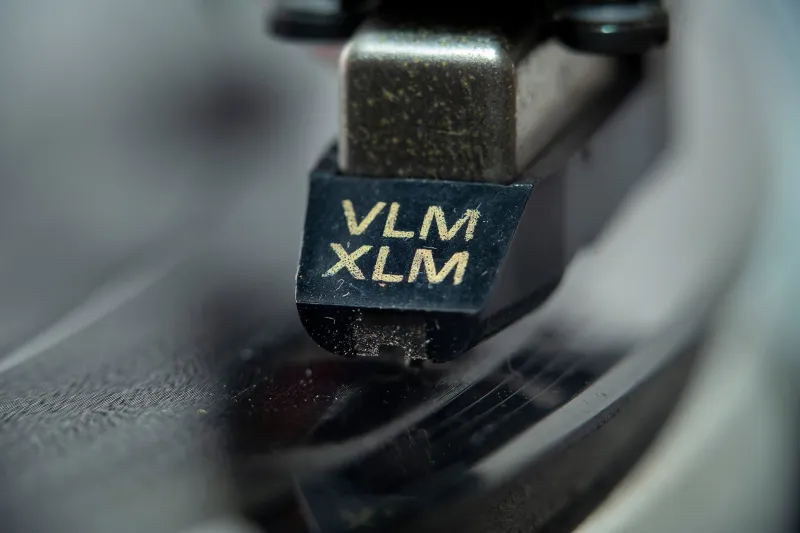
The needle drops. The paper stays in hand. And somehow, the whole night feels more like a performance and less like a playback.