Wax in Mind: The British Artists Completely Rethinking How They Perform Live When Vinyl Is the Destination
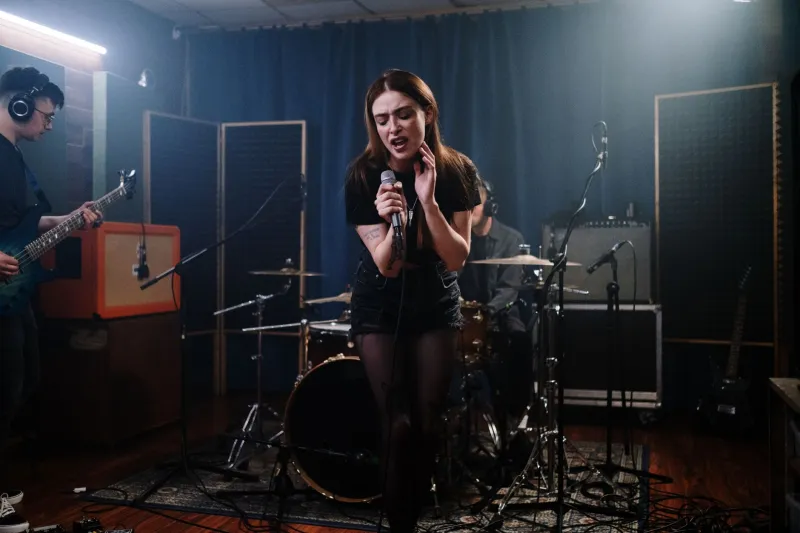
There's a moment, somewhere around the third song of a live set, where most audiences stop thinking about the recording process and just let the music take over. Fair enough. That's the whole point. But for a clutch of British artists who already know that night's performance is heading for the pressing plant, that third song — and every decision surrounding it — has been meticulously thought through long before the first door opened.
Recording live shows for vinyl isn't new. What is new is the degree to which the specific demands of vinyl mastering are now shaping the performance itself, from the ground up. We're not talking about a few extra rehearsals. We're talking about a wholesale rethink of what it means to play live when the groove is the goal.
The Frequency Problem Nobody Talks About Onstage
Ask a mastering engineer about the challenges of cutting live recordings to lacquer and the conversation turns technical pretty quickly. Vinyl has a complicated relationship with low-end frequencies. Too much bass — particularly heavy sub-bass — and the cutting stylus starts eating into adjacent grooves, causing distortion or, worse, the needle skipping on playback. It's a physical limitation baked into the format itself.
For artists performing in, say, a 500-capacity venue in Manchester or a sweaty basement in Bristol, this creates a genuine creative tension. The bass-heavy mix that sounds absolutely massive through a club's speaker stack is often the exact opposite of what the lacquer wants to receive.
"We actually had to have a conversation with our bassist before our Islington Assembly Hall show," says one indie rock bandleader who asked to remain unnamed ahead of their pressing announcement. "Not about playing better. About playing differently. There's a version of his parts that sounds brilliant in the room and a version that survives the cut. We had to find something that worked for both."
That negotiation between live impact and vinyl viability is becoming increasingly common. Some artists are working with their sound engineers to build two parallel signal chains at shows — one feeding the PA, one feeding the recording desk — with subtle EQ adjustments made to the recording chain specifically to protect the low end before it ever reaches the mastering suite.
Side Lengths Are Dictating Setlists
Then there's the question of time. Vinyl sides have limits, and those limits are not just about how many minutes of music physically fit on a 12-inch. The longer a side runs, the narrower the grooves have to be cut, which reduces volume and dynamic range. Most mastering engineers will tell you that 22 minutes per side is a comfortable ceiling for a loud, dynamic rock record. Go beyond that and you're making compromises.
For a live show, this is a genuinely strange constraint to work around. Bands are used to building sets around momentum, crowd energy, and the instinctive feel of a room. Suddenly there's a stopwatch involved — not for the performance, but for the format.
Several UK artists are now structuring their vinyl-destined live sets almost like studio albums, with deliberate side breaks built in. Some are framing this to audiences as an interval. Others are using it as a creative device, treating the pause between sides as an intentional moment of atmosphere — a chance for the room to breathe before the second half lands.
"We played two forty-minute sets with a twenty-minute break," recalls one London-based post-punk outfit who recently issued a limited live pressing. "On the night it felt natural, like a theatrical thing. But honestly, we'd clocked exactly where we needed to land on each side before we even soundchecked."
The Silence Between Songs
Here's one that surprises people who haven't thought it through: vinyl mastering engineers need silence between tracks. Not the loose, organic silence of a live show where the crowd is still applauding and the guitarist is tweaking a pedal — actual, clean, usable silence that allows for track separation during the cut.
This is pushing some artists to fundamentally change how they handle the spaces between songs. Extended crowd noise, tuning up between tracks, long improvisational passages that bleed into the next number — all of these create headaches at the mastering stage. And so the stage patter is changing too.
Rather than letting applause swell naturally, some artists are learning to guide the room. Brief, purposeful acknowledgements. A quick word to the crowd that lands and ends cleanly. Then into the next song before the noise has time to sprawl. It's a subtle thing, but audiences at vinyl-targeted shows are increasingly noticing a certain crispness to the pacing — a tightness that isn't about nerves but about craft.
"You can always tell when a band has done their homework," says one seasoned live recording engineer based in Leeds. "The good ones don't let the room run away from them between songs. They're conducting the silence as much as they're conducting the music."
Dynamic Range as Performance Choice
Vinyl rewards dynamic range in a way that heavily compressed digital recordings often don't. The format has an almost tactile relationship with the contrast between quiet and loud — it's part of what gives a well-cut record that sense of physical presence. For live performers who know they're heading for wax, this is actually a liberation.
A number of British artists are leaning into this, deliberately building more dynamic contrast into their live arrangements. Quieter verses. More space in the mix. Moments where the band genuinely pulls back, not just for dramatic effect but because they know the lacquer will reward the restraint with warmth and depth that a flat, maximised recording simply cannot replicate.
For audiences, this can feel revelatory. Shows recorded with vinyl in mind often have a different quality of attention in the room — a sense that the quiet moments matter as much as the loud ones, which, of course, they always did.
A Different Kind of Discipline
What's striking about all of this is that the technical constraints of vinyl mastering are, in many cases, pushing artists towards better live performances. More considered arrangements. More purposeful communication with the crowd. More dynamic intelligence in how songs are built and delivered.
The format is, in a sense, functioning as a creative editor — one that operates not in the studio but in the venue, during the show itself, shaping decisions in real time.
There's something very fitting about that. Vinyl has always demanded a certain commitment from the listener — you have to get up to flip the record, you have to care about the ritual. It turns out it demands the same from the people making it. Even when they're standing under stage lights with a crowd in front of them, the wax is already in the room.