Pressed Without Permission: The Shadow World of Britain's Live Recording Bootleggers
The record arrives in a plain white sleeve, no label, no catalogue number. The vinyl itself is a deep, slightly uneven black — not the uniform gloss of a commercial pressing. On one side, hand-stamped in red ink: a band name, a city, a year. On the other: side two. That's it. No liner notes, no credits, no legal text. Just music that was never meant to exist in this form.
This is a bootleg. And in Britain, they're everywhere — if you know where to look.
The Underground Pressing Circuit
The market for unauthorised vinyl pressings of live performances has existed in the UK since at least the late 1960s, when entrepreneurial fans began capturing concerts on reel-to-reel and finding sympathetic pressing plants willing to look the other way. Decades on, the mechanics have changed — digital recording equipment has made high-quality source tapes far easier to obtain — but the culture persists with surprising vitality.
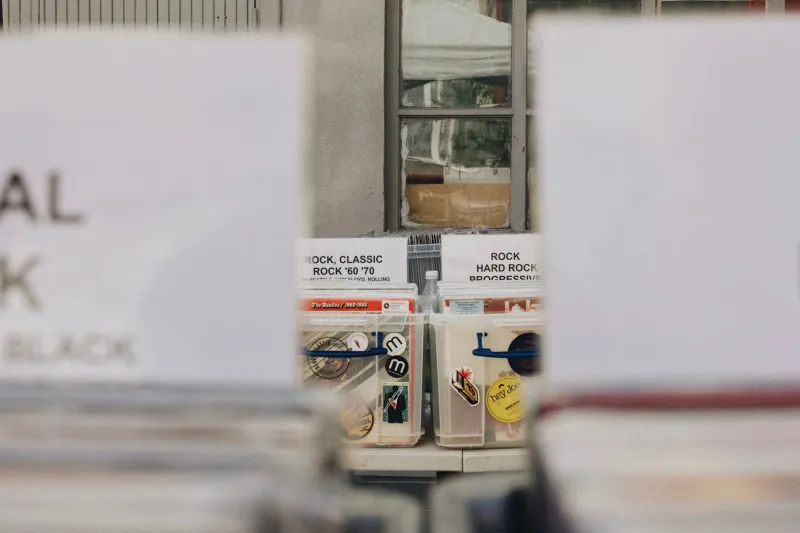
Boots, as collectors call them, circulate through a network of record fairs, specialist dealers, online forums, and private trading groups. Prices vary wildly. A poor-quality audience recording of a moderately famous act might fetch a fiver. A soundboard-sourced pressing of a legendary one-off performance, in good condition, can command several hundred pounds.
The people making them are harder to pin down. Most operate anonymously, pressing small runs — sometimes as few as fifty or a hundred copies — through a patchwork of small plants, some domestic, some European. Nobody advertises. Nobody takes credit. The whole enterprise runs on trust, taste, and a shared conviction that certain performances are too important to disappear.
"There are shows that will never be officially released," says one collector who's been buying bootlegs for thirty years and asked to remain anonymous. "The label doesn't want to deal with the paperwork, the band has fallen out, the tapes are in dispute. If nobody presses it, it's just gone. I can't accept that."
The Artists' Side of the Argument
For many musicians, that reasoning lands somewhere between frustrating and infuriating. The issue isn't just lost revenue — though that's real — it's the loss of control over something deeply personal.
"A live recording captures a moment when everything might not be perfect," says one British singer-songwriter who discovered bootlegs of their early tour dates circulating online. "I was still finding my feet. I don't necessarily want that to be someone's introduction to my music, and I certainly didn't consent to it being sold."
The legal position in the UK is reasonably clear: performers hold rights in their live performances under the Copyright, Designs and Patents Act 1988, and making or distributing unauthorised recordings is an infringement. In practice, enforcement against small-run vinyl bootleggers is sporadic at best. The economics of pursuing a pressing of two hundred copies through the courts rarely make sense, and the bootleggers know it.
Some artists have taken a more pragmatic approach. A handful of British acts have effectively pre-empted the bootleggers by releasing their own live recordings quickly and affordably — the logic being that if an official version exists, the market for an unofficial one shrinks. Others have simply made peace with it, viewing boots as evidence of a devoted audience.
"I'm not happy about it," admits one musician whose back catalogue is well-represented in bootleg form. "But the people buying them aren't the enemy. They love the music more than almost anyone."
What Bootlegs Preserve That Official Releases Don't
There's a genuine cultural argument to be made for the bootleg, uncomfortable as it might be for rights holders. Official live releases are curated, edited, and often heavily processed. Bootlegs, for all their sonic roughness, tend to be raw — crowd noise intact, between-song chat preserved, mistakes left in. They document not just the music but the event: the room, the night, the specific electricity of a particular audience.
"A soundboard boot from a 1977 show tells you things a remastered official release never could," argues one acoustic historian who has used bootleg recordings in academic research. "You can hear the PA system. You can hear the room. You can hear how the audience responded in real time. That's irreplaceable."
For collectors, this immediacy is the whole point. The bootleg isn't a substitute for the official release — it's a different object entirely, one that official channels have neither the inclination nor the infrastructure to produce.
The Ethics Don't Resolve Neatly
The honest truth is that the bootleg question doesn't have a clean answer, and anyone who tells you otherwise is probably selling something — or trying to protect it.
The artists' frustration is legitimate. So is the collector's conviction that certain performances belong, in some moral if not legal sense, to the audience that was there. The law says one thing. Culture says something more complicated.
What's clear is that the bootleg market exists precisely because the official industry has left gaps — recordings unmade, archives unlicensed, performances allowed to evaporate. Every bootleg is, in its way, a vote of no confidence in the official release cycle.
"If labels moved faster, if artists were more willing to put things out, the market for boots would shrink," says the long-time collector. "The bootleggers aren't the problem. The problem is everything that makes the bootleggers feel necessary."
Somewhere in the UK tonight, a needle is dropping on a record that was never supposed to exist. The room it captured is long gone. The moment is, improbably, preserved. Whether that's theft or devotion probably depends on which side of the pressing plant you're standing on.